The Potomac Valley Audubon Society (PVAS) has a long history of providing quality environmental education to our community, as part of our organization’s mission. A large part of our success as a nonprofit can be attributed to the meaningful educational programs that we provide. We believe that environmental stewardship starts with the education of our community’s youth. Engaging youth in meaningful ways sets them up for a lifetime of impactful memories, which will shape their attitudes, opinions, and decision-making for the future. Through this article, we will explore the ways through which our long-running fourth grade watershed succeeds at engaging fourth graders through hands-on learning, meaningful experiences in nature, and student action. We will also explore the history and background of the program, the Meaningful Watershed Educational Experience (MWEE) model, how our program is funded, and the ways that we network with local watershed organizations. Finally, we will describe the various challenges we have faced over the years, long-term program success stories, and our hopes for the future of watershed education in our area!
There are many avenues through which PVAS’s outdoor education takes place in our community. We offer family and all-ages programs, summer camps, and co-sponsored programs with other organizations. However, the programs which reach the greatest number of children- and the most diverse audience- are our school-based programs. For this reason, we have invested a great deal in creating a systemic education model, one which is built to last over the course of many generations of learners. In the schools, we reach every child. Some of these children have grown up playing in creeks, going hiking, and learning about local wildlife. Others exclaim that they’ve never walked in a creek before, never caught a crayfish, and- most surprisingly of all- have never even been on a hike in the woods.
Many may assume that our home-grown West Virginia kids grow up playing outside, but for many students, this is not reality. Here in the Eastern Panhandle (Jefferson, Berkeley, and Morgan Counties), there is a mix of more urban, suburban, and rural environments. Children from any of these environments may have different lived experiences with connection to nature. It is challenging for many working families to find the time to get their kids outdoors, especially if they don’t have a large backyard or live in close proximity to green spaces. Of course, there are other external distractors vying for children’s attention as well. Television, social media, and video games are the biggest competitors for children’s time.
According to the National Wildlife Federation, the average child in America spends on average only 30 minutes each day engaging in unstructured outdoor play. In contrast, they spend more than seven hours per day in front of a screen. Even in the school environment, screen time is steadily increasing, as part of instructional time. One of the goals of our watershed program is to empower teachers to get their students outside, and encourage them to use nature as a platform for learning. Our fourth grade watershed program has proven to be a magnificent avenue for achieving this goal.
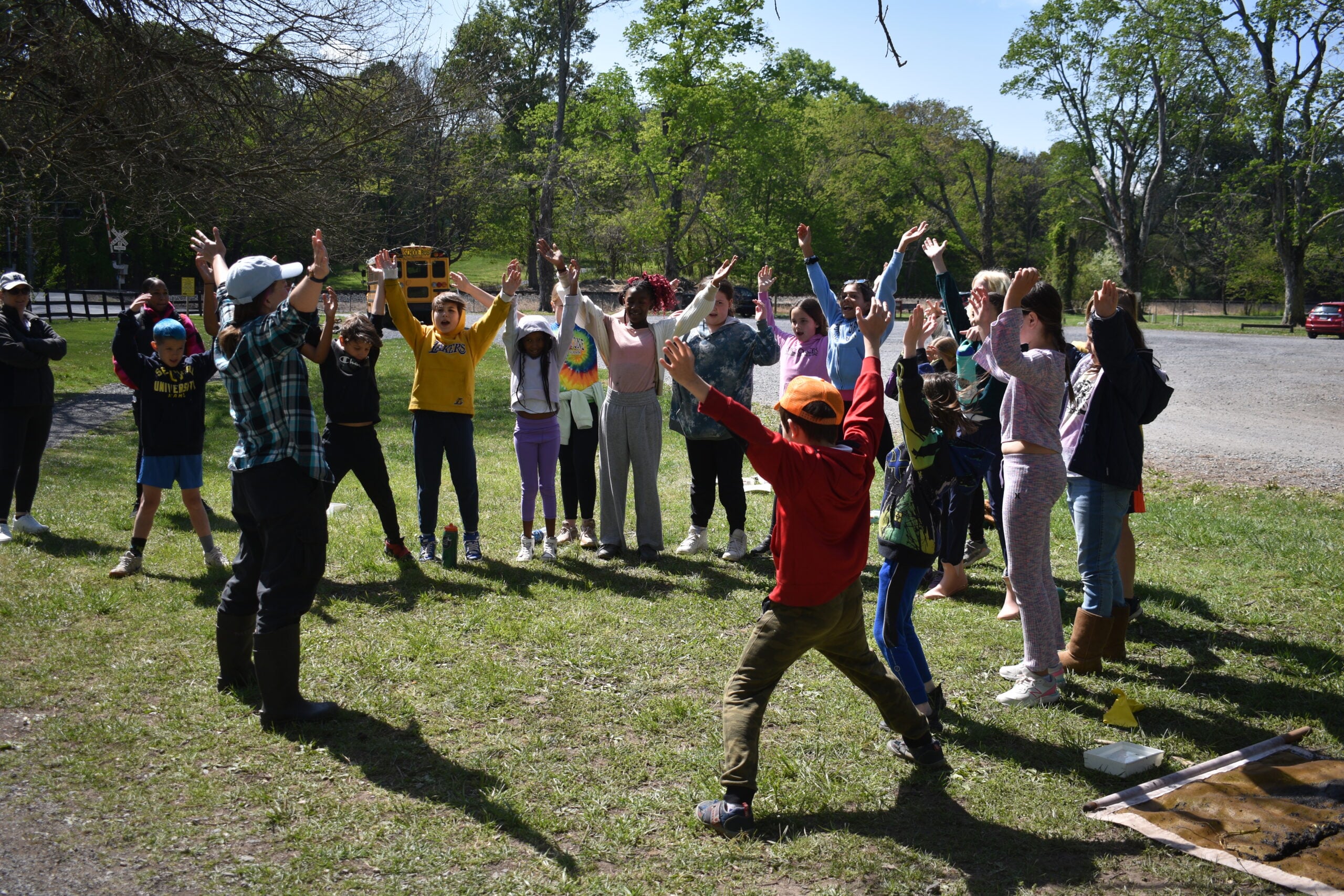 Coordinating the Watershed Program for the last five years has given me many valuable insights about the program and its goals, but I wanted to learn more from those who came before me about the ways in which the program has evolved and changed over the years. To learn more about the Watershed Program’s history, I’ve interviewed the program’s curriculum developer- and PVAS’s Executive Director- Kristin Alexander. Kristin has worked with our organization since 2001. I also connected with one of the very first batch of interns who helped pilot the curriculum, Annie Young. Annie is still helping us teach the program today! Additionally, it was important that we hear from some of the students who have participated in the program as fourth graders, and are now going on to explore conservation or education careers. Included in the article, there are also some testimonials from fourth grade teachers, some of whom have invited the program into their classrooms for many years over the course of their teaching career. I’m thankful to all of the interviewees for their time recollecting the watershed program and sharing their insights with me.
The origins of our fourth grade Watershed Program actually began in Minnesota, where Kristin and a colleague first developed the watershed program curriculum for fifth grade students. The watershed of focus there was the Gulf of Mexico. When Kristin started work with PVAS, she pursued an educational grant from the Environmental Protection Agency (EPA) in 2002. Kristin said “The EPA grant that we were going for would not fund the development of new curricula, but they would fund adaptations of existing curricula. It was the perfect opportunity to tweak the Watershed program that we developed there (in Minnesota) to here, the Potomac River and Chesapeake Bay watershed.”
Kristin explained to me that she had a connection with the Chesapeake Bay early in her career as well. “Water quality in the Chesapeake Bay was one of the key issues that we wanted to address when starting the fourth grade program. One of my first jobs out of college was working on the Chesapeake Bay, and it was where I was first introduced to the term, “watershed.” The Bay is near and dear to my heart. I saw a lot of the watermen struggling with oyster and crab harvests. Their livelihoods were being threatened by sedimentation and other water quality issues.”
After moving to Shepherdstown, Kristin realized that there was an education gap when it came to watershed issues. “I was teaching a class at Shepherd University and I remember talking about water quality and how the storm drains lead straight to the Potomac River. I remember the puzzled looks I got from college students saying ‘Really? That’s where those go?’ One student actually said ‘Oh, I guess I shouldn’t dump my oil from my car down those drains.’ It was one of those “aha moments” that oh my gosh, people really don’t get it!” Kristin went on to describe the ultimate goal of the program, which was “…to train young kids to be better stewards, and hopefully teach their parents to be better stewards. What is so exciting to me is that we have over 20 years invested in this project now.”
Our curriculum for the Watershed Program follows the Meaningful Watershed Educational Experience (or MWEE) model, which was developed by NOAA. According to NOAA, the MWEE Model is “is a learner-centered framework that focuses on investigations into local environmental issues and leads to informed action. MWEEs are made up of multiple components that include learning both outdoors and in the classroom and are designed to increase environmental literacy by actively engaging students in building knowledge and meaning through hands-on experiences.” MWEEs consist of four essential elements: issue definition, outdoor field experiences, synthesis and conclusions, and environmental action projects. The MWEE model is considered the gold-standard for watershed education, and is implemented by school systems and environmental organizations all over the country.
In 2003, we began piloting our fourth grade program in three schools in Jefferson, Berkeley, and Morgan counties. The program, from its beginnings until now, has consisted of five in-class lessons with a PVAS instructor, and a field trip to a local park or preserve. Each lesson consists of multiple hands-on activities, designed to encourage a high level of student engagement. Early on, Kristin asked teachers if they would be willing to teach the program themselves, with training and the delivery of supplies for the hands-on activities included in the lessons. “Over and over again, the teachers said that no, they wouldn’t be able to make the time. It became clear that part of the impact of the program is that scheduled time and the fresh face that comes into the classroom and makes it special, makes it different.”
During Lesson 1 of the Watershed Program, students are introduced to their PVAS instructor. Then, they learn about the physical properties of water, including the three states of water, as well as surface tension. They will also investigate the water cycle, and the processes by which water is recycled across the entire globe. They also learn that only one percent of all the water on Earth is accessible fresh water. During this lesson, students are introduced to the water cycle song- formerly the water cycle boogie- and will sing it with great enthusiasm as a review in all of the lessons to come!
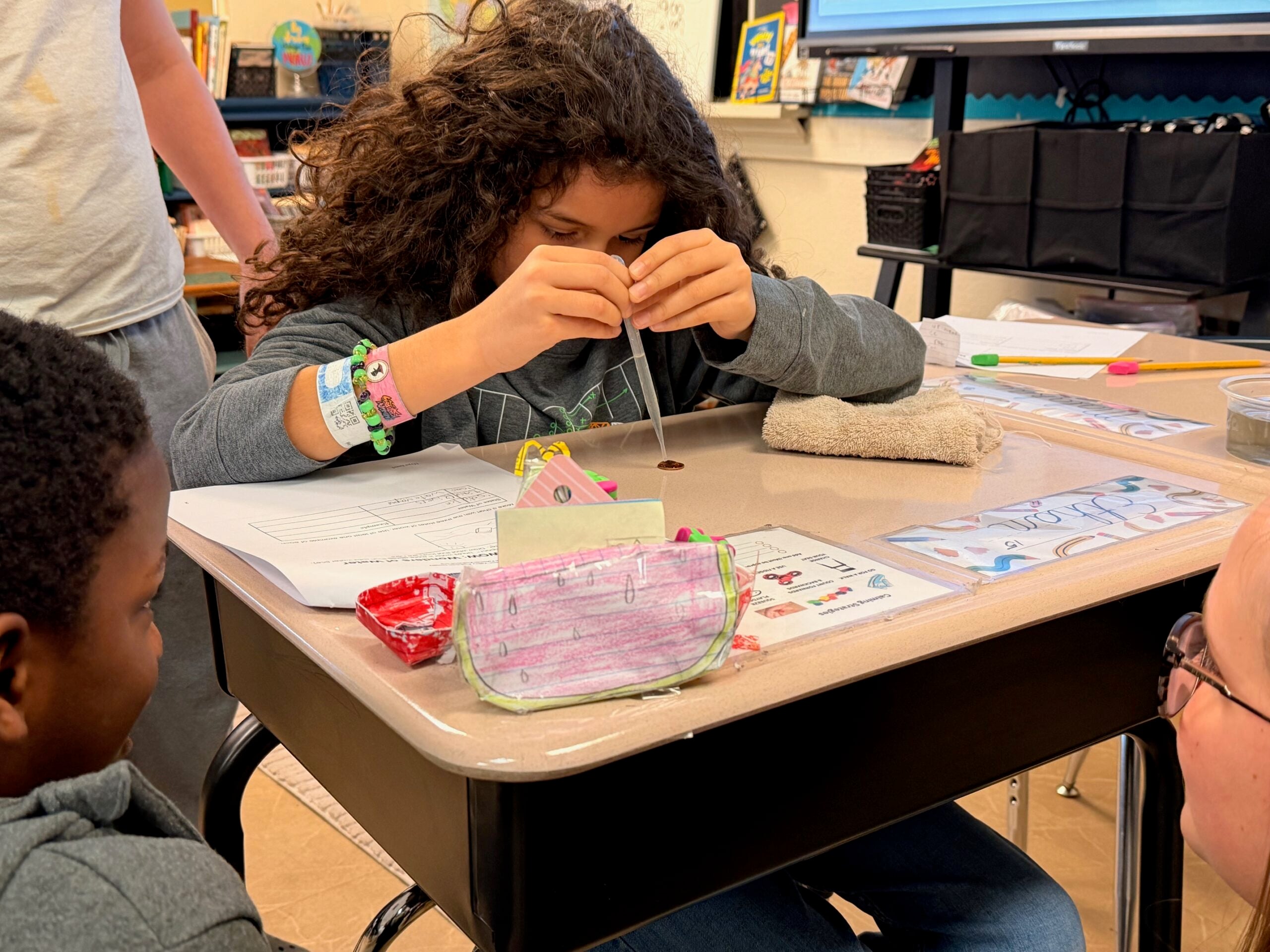 During Lesson 2, students investigate their connection to local waterways, as well as their connection to the Chesapeake Bay. They’ll discover these waterways by tracing streams on county maps, and then discovering the continental divides on a raised-relief map of the United States. Then, students are able to recite their school’s “watershed address.”
In Lesson 3, students learn about the various pollutants that can affect our waterways, and use an enviroscape- a plastic model of a watershed upon which they build a town- to demonstrate the ways in which pollutants can run off the land and enter the water. Following the demonstration, they discuss the causes of algae growth and eutrophication, soil erosion, pesticide use and its effects on aquatic systems, pathogens in the water from sewage and agricultural runoff, and plastic pollution in the ocean. The lesson culminates on a positive note, as students learn that trees can be “heroes” for the watershed, especially when they grow in the riparian area and act as a buffer zone for protecting the water from many types of pollution.
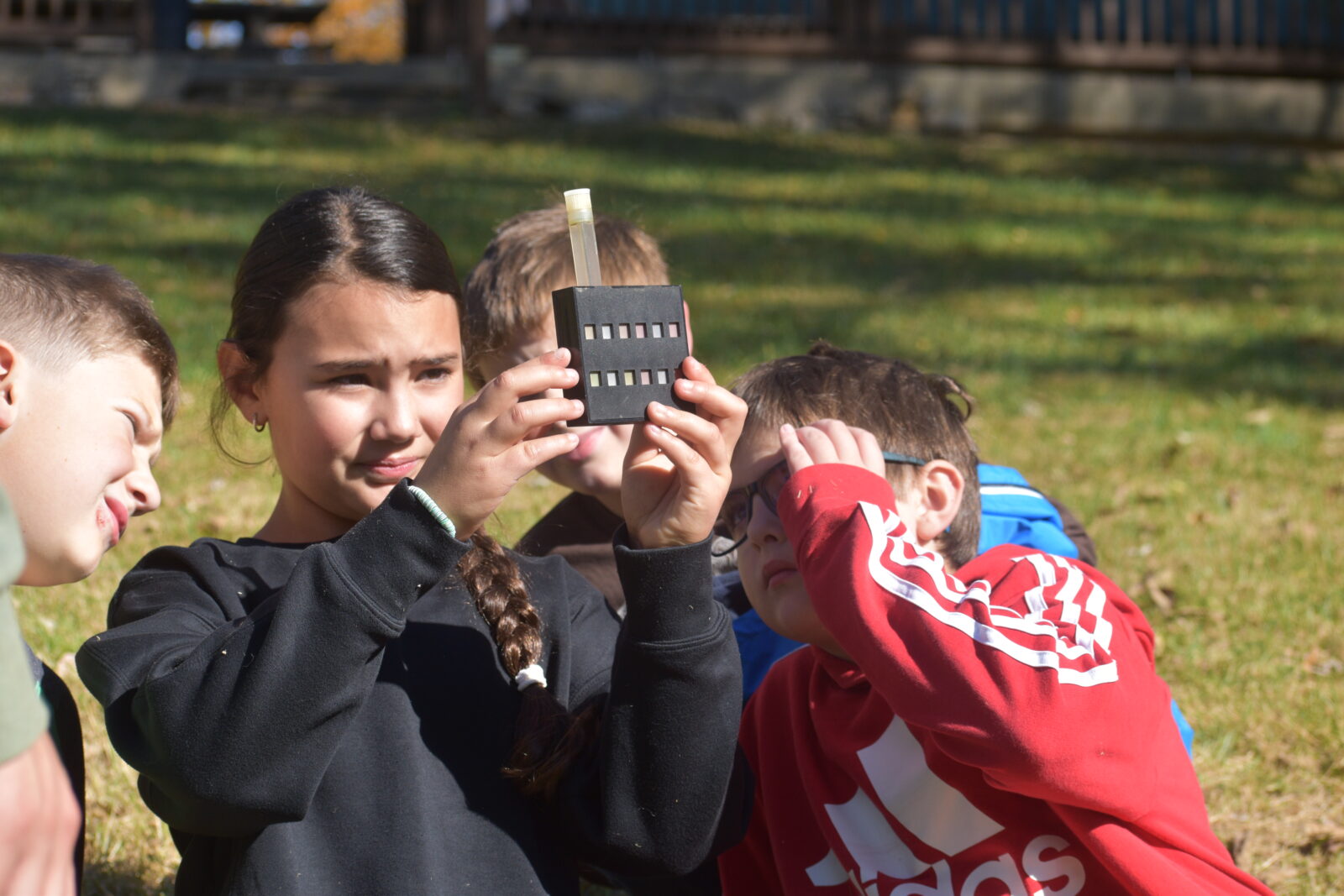
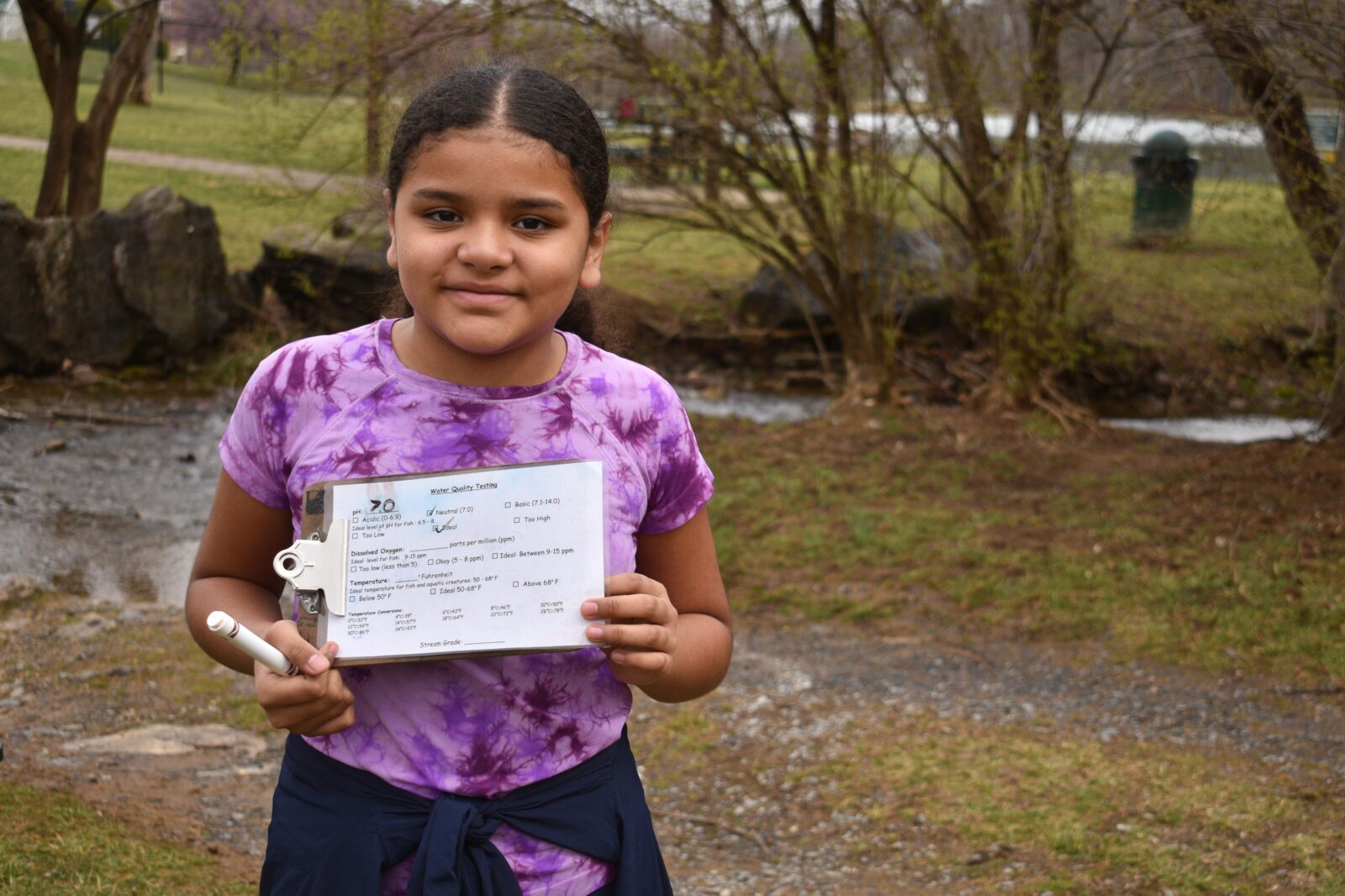
In Lesson 4, students learn about water quality and issues related to temperature of the water, pH, and dissolved oxygen. They use litmus paper to practice taking the pH of common household liquids, such as lemon juice and windex. Students also mix together baking soda and vinegar, to learn about how acids and bases can neutralize one another. They also investigate the natural ways that dissolved oxygen can be added to the water, through hands-on demonstrations. Fourth graders connect this lesson to their upcoming water quality station on the field trip.
For their last in-class lesson, Lesson 5, students will venture outside to the schoolyard to discover “strengths” and “issues” related to their schoolyard’s impact on the environment. Many classes will encounter previous action projects completed by fourth graders of years’ past, including rain gardens, pollinator plantings, and native trees added to the landscape. They might also find “issues” such as invasive species, erosion around playground equipment, or pieces of litter. Upon return to the classroom, students are prompted to make a list of all of the positive and negative things that they found on their investigation. The conversation might also include eco-friendly habits that they do or could initiate within the school building. Students will finish the lesson by dreaming up actions that they can take to make their school more watershed-friendly. Many classes follow through on these actions during the course of the school year. Some contact other nonprofit partners to help them get started with projects such as tree plantings, schoolyard rain gardens, pollinator gardens, or native sapling grow-out stations. We direct them to organizations like the Cacapon Institute for many of these types of projects
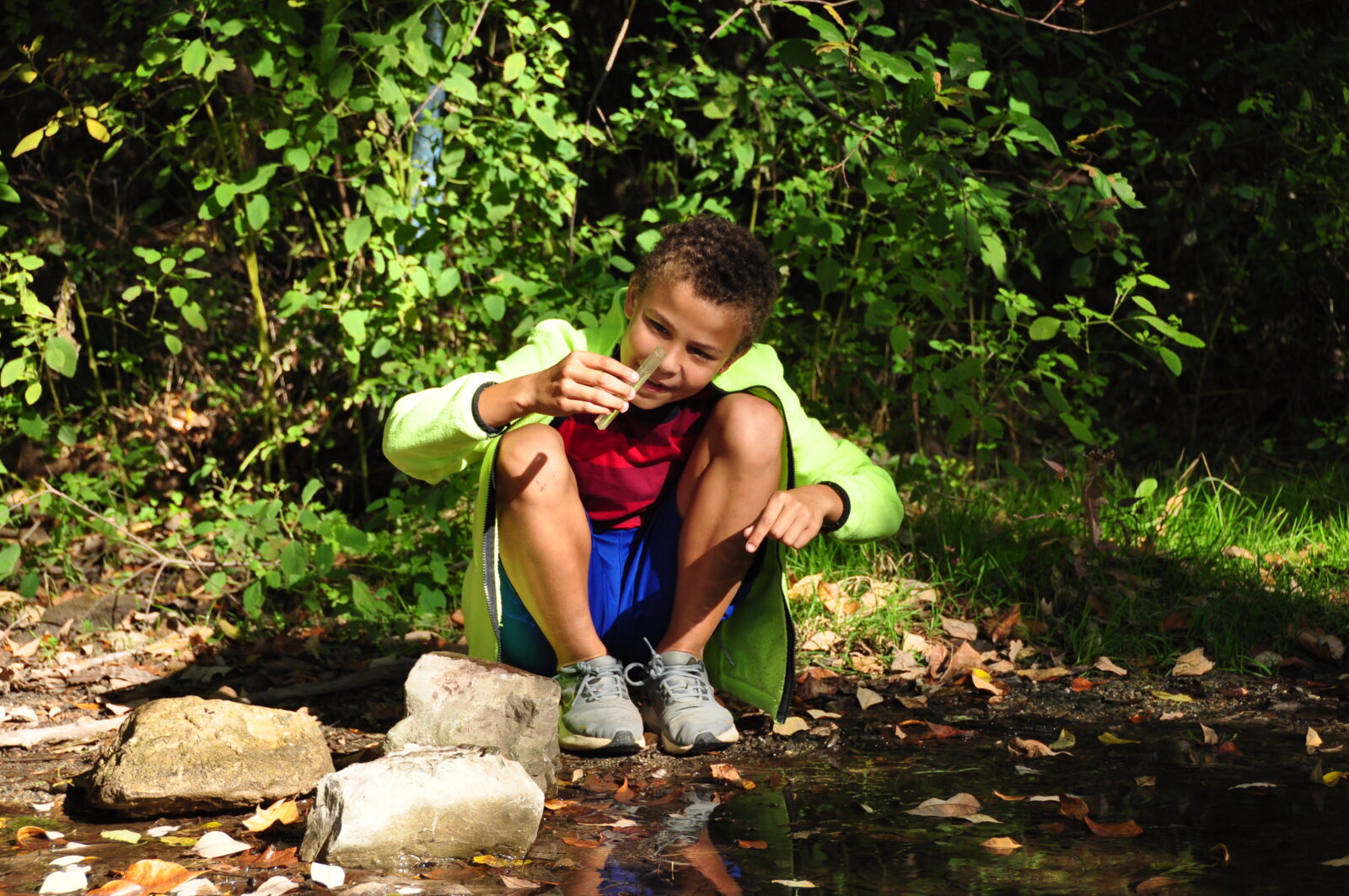
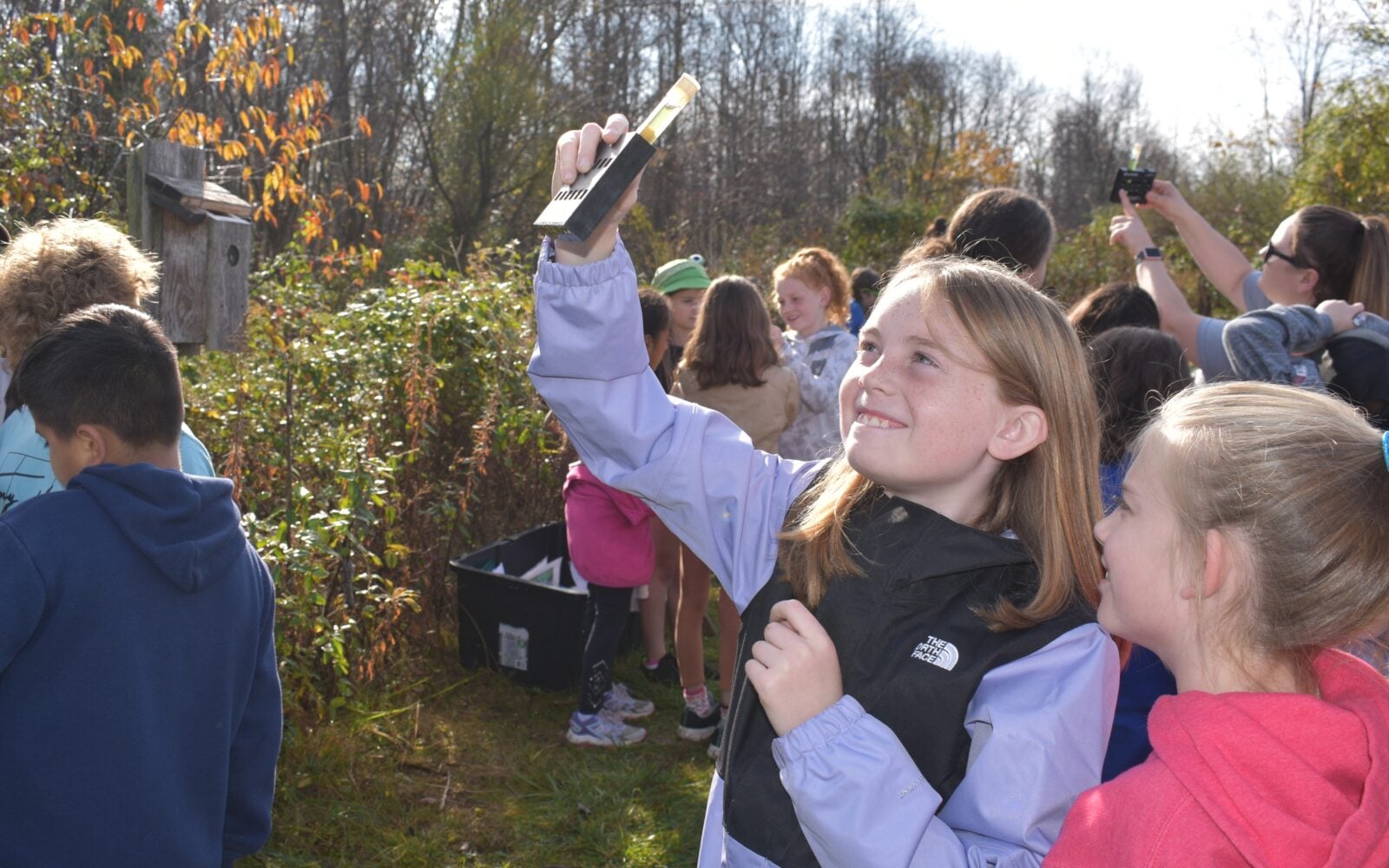
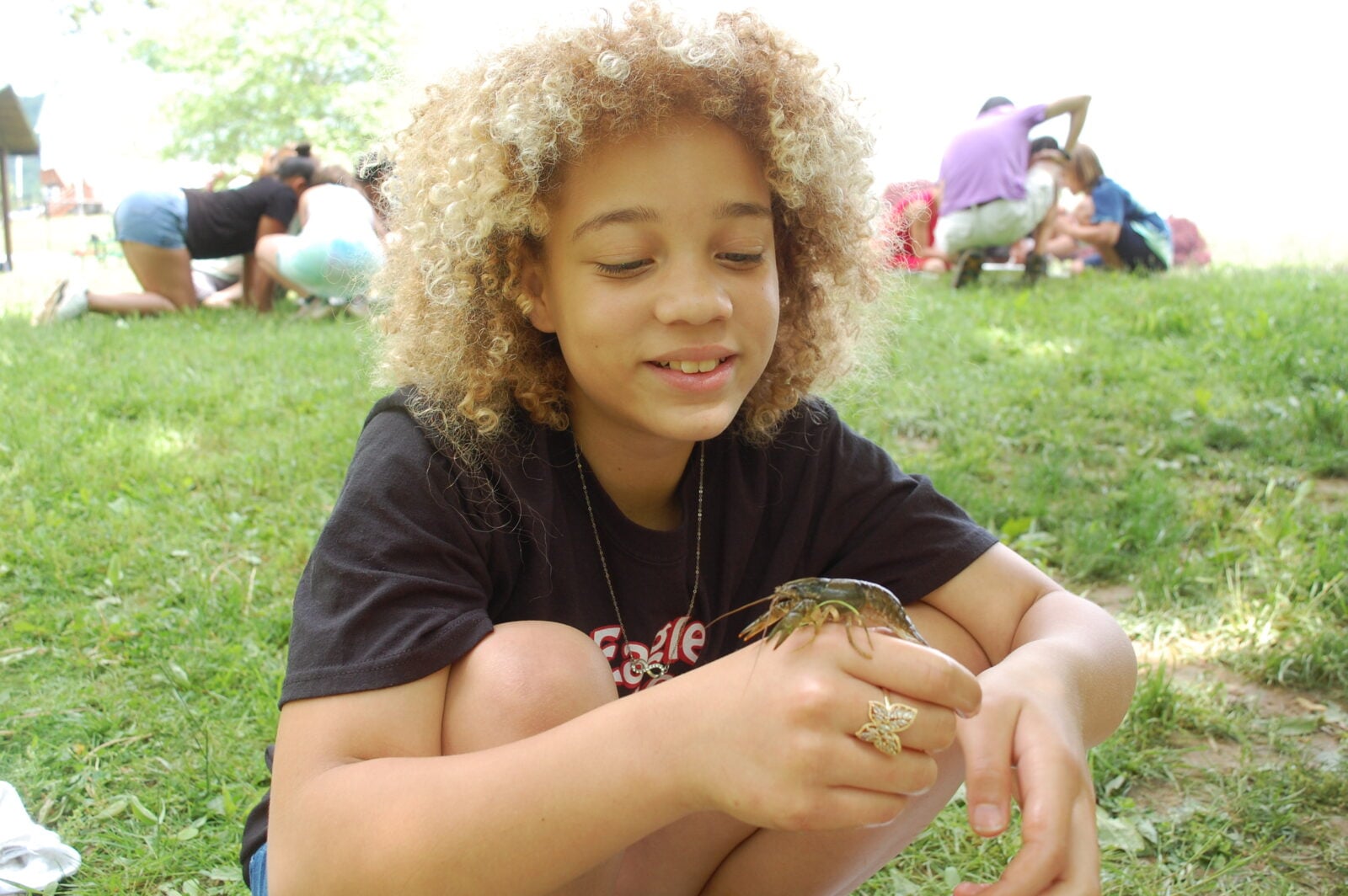
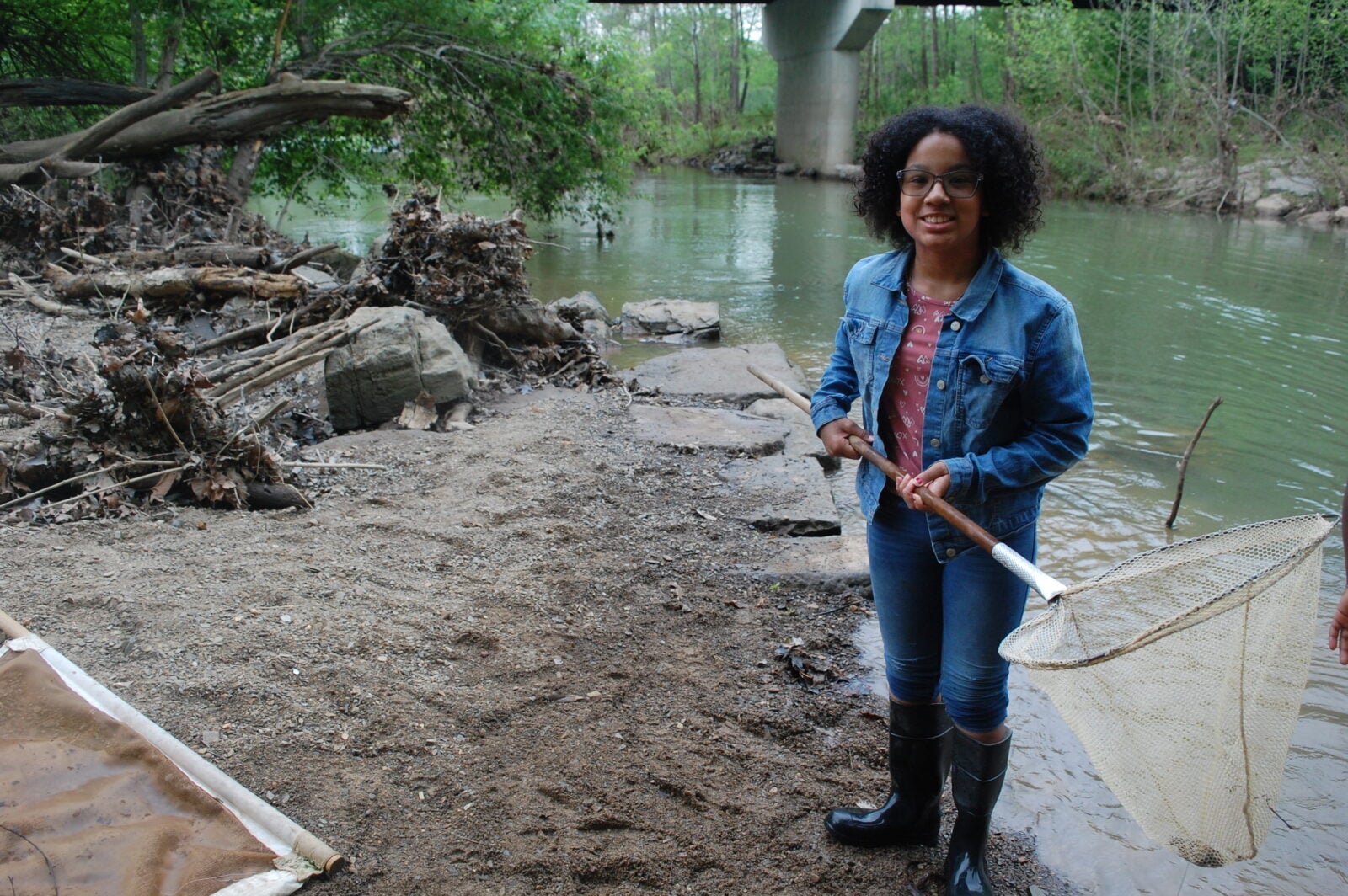
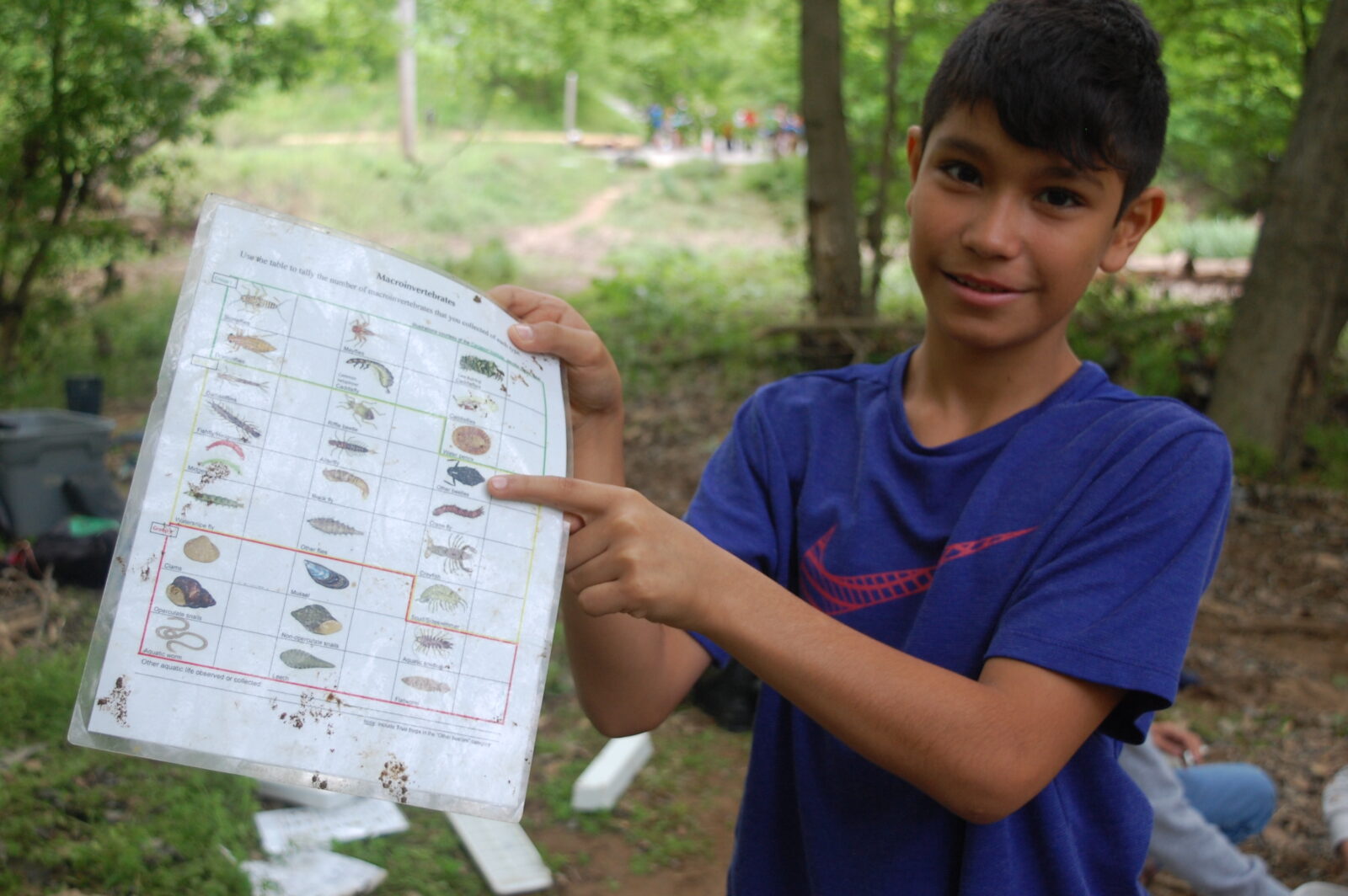
On the day of the long-awaited field trip, students rotate through four stations, all building on the content of the classroom lessons. At the filter building station, students will build filters out of natural materials to simulate a buffer zone. They will also test for pH, turbidity, dissolved oxygen, and temperature at the water quality station. At the macroinvertebrates station, students will get in the stream with nets to look for benthic macroinvertebrates and fish, learning about the stream’s ecosystem. Students will also go on a habitat investigation to evaluate the stream’s buffer zone and learn about native plants and animals.
While the program is mostly the same as it was over twenty years ago, there are a few differences. “In the beginning, we never had a powerpoint. The program was a lot more verbal, with occasional drawings on white boards, which may not have been as effective because it didn’t have the consistent visual components.” Kristin elaborated that she also loves the addition of the watershed journals that were developed later in the program’s progression. The journal prompts allow for the students to reflect on the content of the lesson, and provide a cross-curricular literacy tie-in.
I also had the opportunity to interview one of the very first interns who helped pilot the program in the schools, Annie Young. She recalls “I was in my last semester at Shepherd before I graduated in September… and I remember being in the environmental building at Shepherd and seeing a flyer (for PVAS’s internship). So then I met Kristin. We met at the Sweet Shop… She seemed so familiar because she’s so friendly. There was this sense of familiarity, like a connection.” After meeting Kristin, Annie knew that the position was going to be a good fit for her. “The training (for the program) was through Kristin, and they had only just begun teaching in the schools for a semester.” Annie recollects teaching at three or four different schools, and doing tree plantings at each school to fulfill the environmental action portion of the MWEE model.
Annie went on after her internship to teach in the public schools. After she became a mother though, she opted to pursue other career options and wound up instructing for PVAS again for a short while, and then teaching at her Montessori school. Eventually, her daughter and Kristin’s son wound up being in the same fourth grade class at South Jefferson elementary school. Annie had the opportunity to teach the Watershed Program in their classroom. She said “They needed an instructor to teach at South Jefferson… It was such a full circle moment. To think that I was teaching the program 15 years later in their classroom! For them to be able to have this experience was so impactful for me as an educator… and as a mom.”
When asked what her favorite lesson or activity to teach is, Annie said “I think I like being part of the field trips (the most). It is so fun to see the kids you’ve worked with paying attention and making connections… The impact of just being outside is enough, that’s fine. But I see so many connections being made during that time… I’m kind of selfish about being able to be the person that’s outside with them. It’s a great time to synthesize everything we’ve learned about… It’s very fulfilling.” She goes on to say “The kids are so desperate almost for being able to do something hands-on. Their eyes light up when you say the word ‘experiment.’ All eyes are locked on you… It’s something that they look forward to.”
Often the field trip is the most memorable aspect of the experience for past students. It’s amazing to see that some of the students who participated in the Watershed Program fifteen to twenty years ago, are now entering their careers! I was introduced to Andrew Study through his mom Julie, who has been volunteering for our Watershed field trips. Andrew is a current student at the University of Minnesota Duluth. He’s majoring in Environmental and Outdoor Education. When asked about his career goals, he said that he would ultimately love to work for the US Fish and Wildlife Service (FWS), within the fields of environmental education or law enforcement. If he ends up in FWS law enforcement, he said that he would love to use his career as a teaching opportunity as well, to educate about the effects of poaching.
When Andrew was in fourth grade, he attended Shepherdstown Elementary School. He recalls, “I remember one lesson where we had a three dimensional model of a watershed… We used it to learn about runoff.” He also recalls his Watershed Program field trip, “I remember putting on boots and dip netting into the stream behind Home Depot.” This was one of our previous field trip sites. He continues “Then we all were given a little tree to take home and plant. Those are the things that I think were the most memorable.” Andrew also credits his love for outdoor education to his mom, Julie, who was an outdoor education major in college as well, and to his father who works for the Maryland State Parks. Andrew also recently received his Project Wild certification. He speaks of his experience at college “One thing that I really appreciate was… they got (us) into the classroom and provided us with teaching experience. We led a program with third graders in Washburn Wisconsin. I was like ‘This is awesome!’ And that’s when a switch flipped for me and I knew what I wanted to do.”
Andrew also was a counselor-in-training (CIT) at our Audubon Discovery Camps when he was in middle school. He remembers “that must have been 2017 or 2018… I remember a little bit of foraging that we did… I remember making paracord bracelets and building a fire… compasses, orienteering.” He said that memory of the summer camp “fred in the shed” compass lesson helped him in one of his outdoor skills classes in the past semester. It was wonderful to hear about all of the takeaways that Andrew had from both his fourth grade Watershed experience and his time as a CIT at our nature camps.
One of our current board members, Lucia Valentine, was also both a Watershed Program participant and an Audubon Discovery camp camper in her childhood. She says “Being on the (PVAS) board is so full circle to me! From being a camper, to participating in the watershed program, to now working in environmental policy, it has been special now to be a part of the organization that helped me learn- I hope to pass some of that on to other young folks!” Lucia attended high school and college alongside me at Jefferson High School and then attended Shepherd University- where she studied music and environmental science. In fourth grade though, she went to Shepherdstown Elementary School. She has memories of the fourth grade program, which she shared with me. “I… remember taking a field trip to the part of town run that flowed behind the elementary school. I remember learning about our watershed and the interconnectedness of our local waterways and how they interacted with neighboring states and bodies of water. I think the theme I remember most is being introduced to the idea of collective responsibility in the context of stewarding the water we have because it is passed on to others.”
Lucia has now built a strong background in environmental policy. She’s built a career “at the intersection of advocacy, coalition building, and public service.” She says “I have worked as an environmental organizer, and now policy specialist at the state level. I am also running for House of Delegates in West Virginia!” Lucia has worked on initiatives at both the state and federal levels, and has demonstrated “a deep commitment to creating lasting impact through collaboration and civic engagement.” When asked if the Watershed Program and similar environmental education programs have had an impact on career path, she said “Definitely!” and elaborated, “PVAS has played an integral role not just within the environmental community, but the community as a whole. Being exposed to these programs and having the chance to learn from community leaders who were/are passionate about protecting our environment was a huge inspiration to me and part of what planted the seed as to why these things are important.”
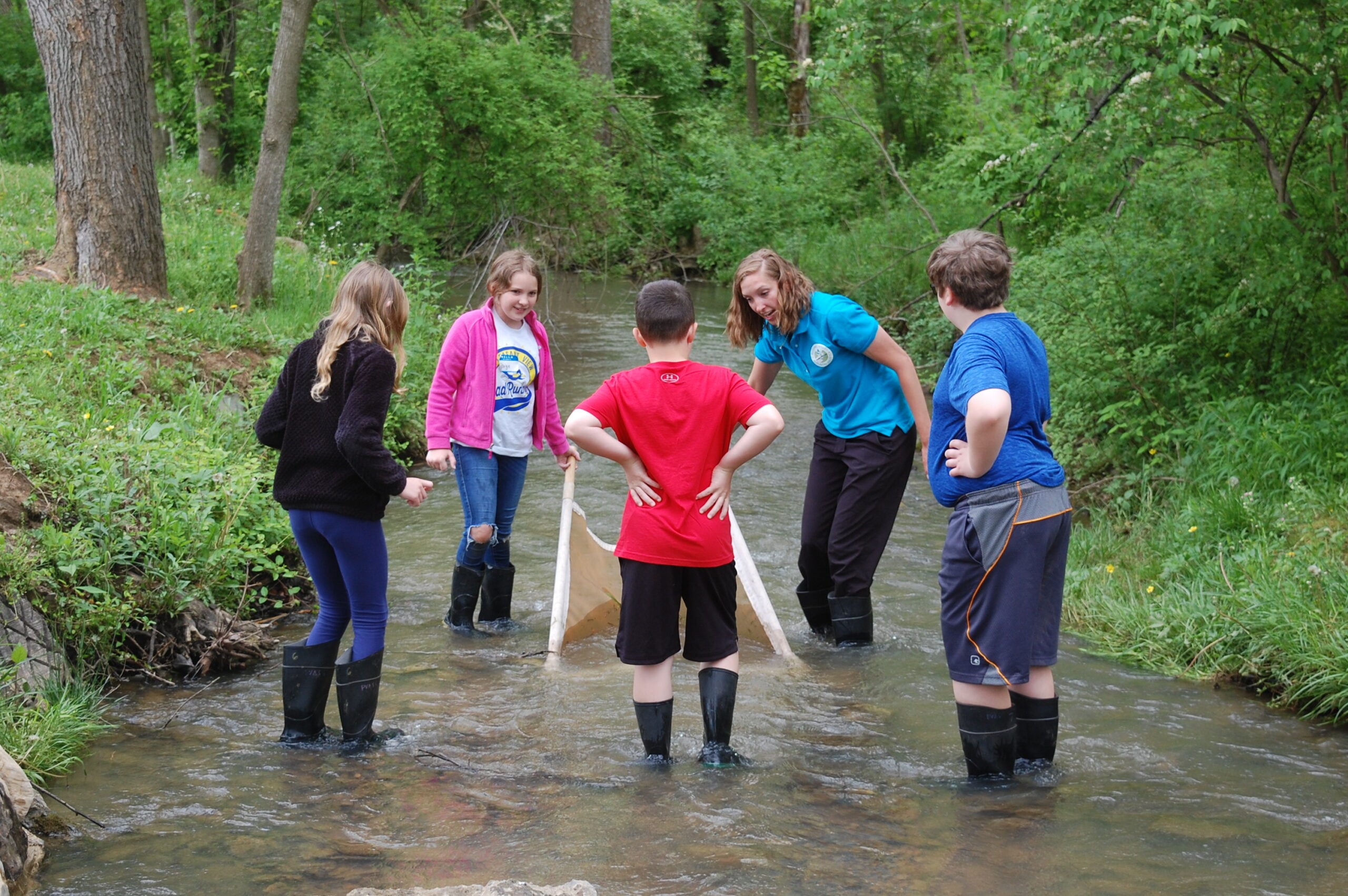 Two of our current summer camp counselors have memories of the fourth grade Watershed Program as well! They both graduated from Martinsburg High School and attended fourth grade in the Berkeley County school district. One counselor, Lily Campbell, is a current elementary school education major at WVU and plans to return to her hometown- Martinsburg- to teach. She remembers her experience catching benthic macroinvertebrates on the field trip, and says that her mom- who was a chaperone on the field trip day- still has photos of her participating! She stated in her interview that she is excited to bring outdoor education to her future students, and is excited to learn more about environmental education during her time with us as a summer camp counselor.
Currently, each year, around two-thousand fourth graders participate in our Watershed Program. While many of them will enter careers not related to the environment, our hope is that the stewardship lessons that they learned in fourth grade will stick with them into adulthood, no matter where their career path takes them. There is good to be done in the world in any career, not just those that we associate with being environmentally-friendly. Teachers are our best partners in delivering this program, and helping make connections with their students.
Getting teacher buy-in for the program has seldom been a challenge. Teachers love that PVAS instructors come in prepared, enthusiastic, and ready to deliver a great STEM-focused lesson. However, funding the program has been quite challenging over the years. When I interviewed Kristin, she described the early funding situation for the program. “For a while, schools were paying for the program themselves. Some schools’ PTOs would raise the money, while some would charge the families. Some schools just couldn’t bear to pass along the cost so those schools didn’t participate. It became an equity issue… It’s always been stressful trying to find money for all of the programs.” In order to rectify these issues, PVAS concentrated on finding ways to fund the program, so that schools wouldn’t have to pay out of their own budget or charge students to participate. We wanted to make sure that every fourth grade classroom would have an equal opportunity to participate in the program, regardless of PTO support or the school’s budget for the year.
In order to make the program systemic, we concentrated on strengthening our partnerships with other local environmental organizations that have similar goals. Together with the Cacapon Institute, Experience Learning, and the Eastern Panhandle school systems, we formed the Outdoor Learning Network Initiative (OLNI). Through this network, we have been able to share funding resources, make more community connections, and strengthen our relationships with the school districts. Even in recent years, however, finding funding for the program has still been a challenge. We are thankful for the longtime funders of the program, such as the WV DEP, the Berkeley County Stormwater District and the City of Martinsburg. The Chesapeake Bay Trust also stepped in as a new funder for this past school year (2025-2026) when we experienced higher program costs due to the loss of AmeriCorps positions. This is not an exhaustive list of funders, as there have been many funding sources that have been piecemealed together over the years. Teachers and the school systems have also often been instrumental in helping to provide letters of support and grant applications to fund the program. Without our program funders, we would not have been able to achieve our goal of having this program become systemic and equitable throughout the Eastern Panhandle. We are grateful to each and every one of them!
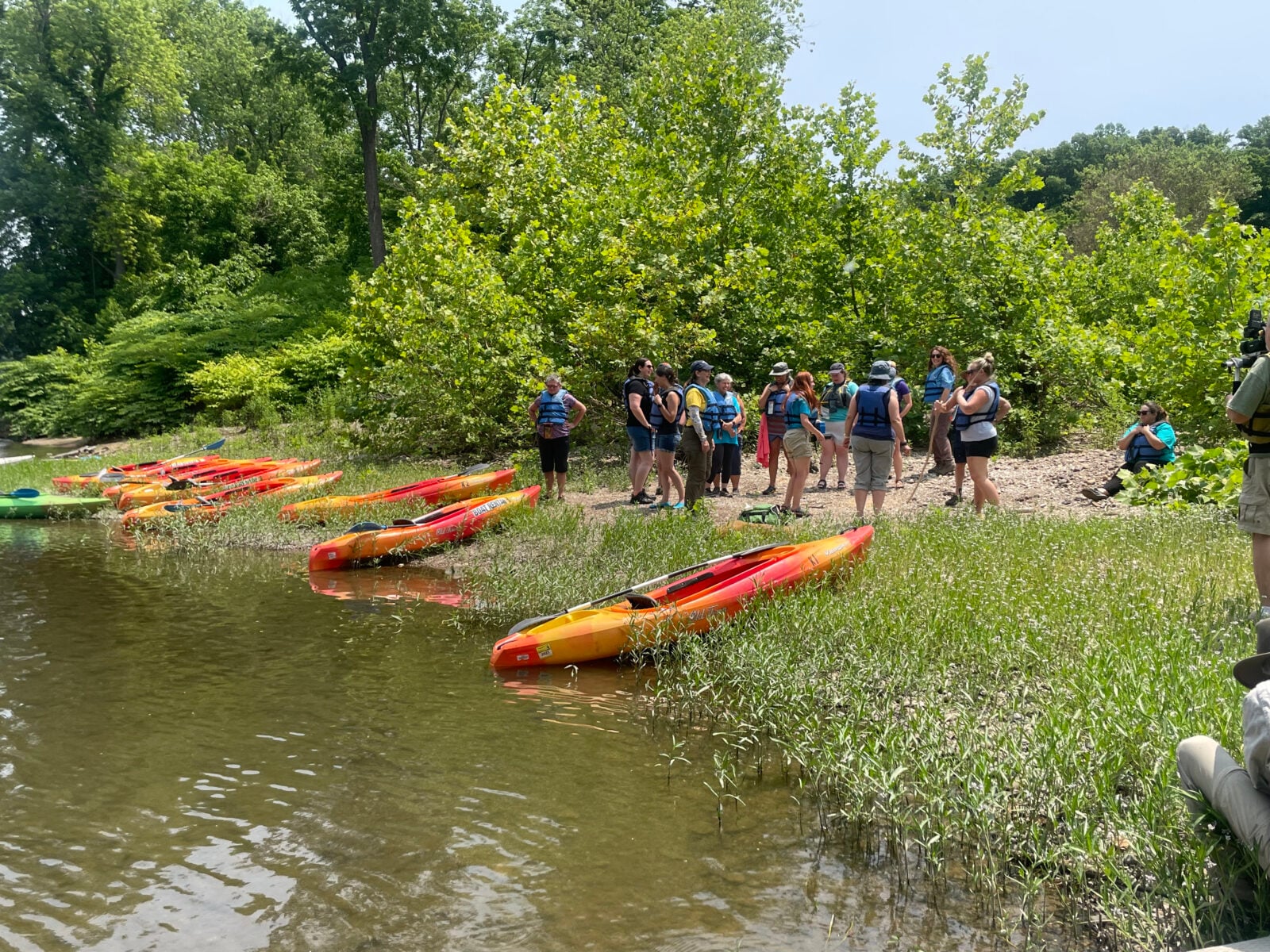
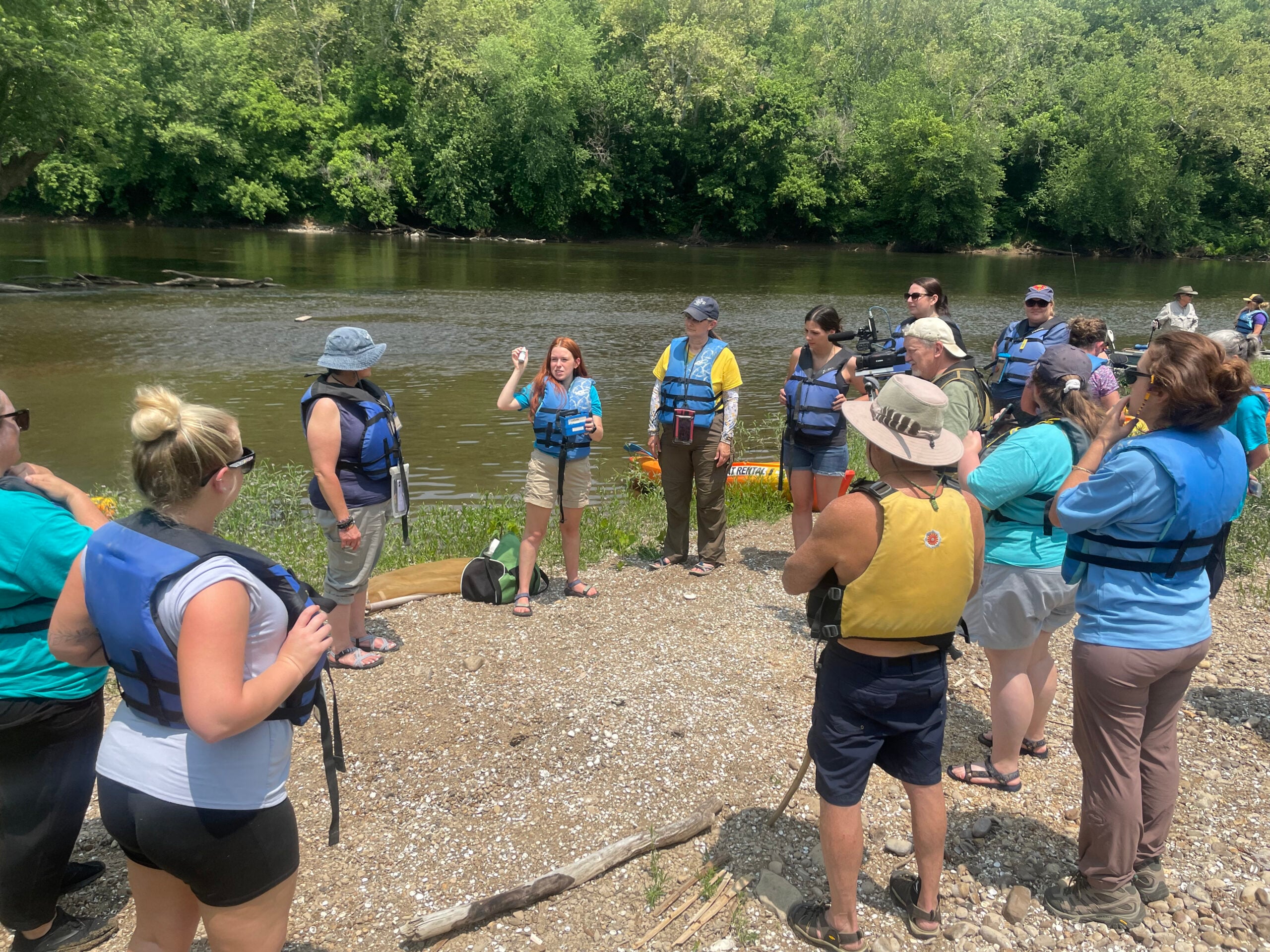
Through OLNI, we have also been able to provide training to local teachers (K-12) on strategies that they can employ to teach about environmental issues and watersheds. Each grade level has different science standards, so we often present activities that can be tweaked for multiple grade levels to meet these standards. Over the last few years, OLNI has even provided a teacher training opportunity in the summer that gets educators out on the river, to explore watershed issues in a very hands-on way, and refresh and rejuvenate teachers for the upcoming school year. We also partner with instructors for projects WET, WILD, and Learning Tree, to provide occasional teacher training opportunities throughout the school year and summer.
 In addition to program funding, another challenge that we have faced as a small organization- with such a large program reach- is staffing for this program. About ten years ago, we began recruiting AmeriCorps members, who served with us under the “Environmental Educator” title. The federal AmeriCorps model focuses on six key areas: disaster services, economic opportunity, education, environmental stewardship, healthy futures, and veterans & military. Our Watershed Program- and other PVAS programs- primarily address education, environmental stewardship, and healthy futures, making the AmeriCorps program a great fit for our organization.
We aim to steward the futures of our AmeriCorps members by providing lots of professional development opportunities- things like environmental education conferences, networking with professionals in related fields, and experience organizing public programs- as part of their term of service. A service term for our AmeriCorps members is commonly a year long, or a half year. We also have summer camp counselor positions available through AmeriCorps. While this does mean that we do a lot of training at the start of each AmeriCorps term, there are clear advantages to continuing to work with AmeriCorps.
By giving our AmeriCorps members a great picture of what outdoor education can look like, we set them up for success in choosing future career paths. Many of our past AmeriCorps members have gone on to become classroom teachers, nonformal educators, or even leaders within the nonprofit space. When speaking about the opportunity to educate future teachers through our program, Kristin said “That’s a really important element of this program in terms of the layers of impact that we can have.” Annie Young asserts that teaching Watershed lessons can be a great confidence booster for new instructors. “I love that (the program) is so well done that even if instructors aren’t trained as educators, they can jump into it. With the teachers’ assistance with the classroom management part, they can do it.” It’s wonderful to watch our AmeriCorps members blossom into more confident and successful educators throughout their relatively short terms of service.
While the federal AmeriCorps program does meet most of our staffing needs for our school programs, we still sometimes hire part-time professional educators, like Annie Young, to fill in the gaps. This can be quite helpful, as the AmeriCorps members gain experience and get a chance to work alongside- or shadow- professional educators who have been teaching the program for years. Teachers are also wonderful partners, as they give us valuable feedback to share with our instructors. In many cases, teachers will expand upon the concepts following the lesson, and relate watershed content to other science- or even history- topics that they are exploring in class. I was pleased to see that one teacher at Shepherdstown Elementary had created pre-and-post lesson worksheets for her students, to encourage deeper reflection on the lessons.
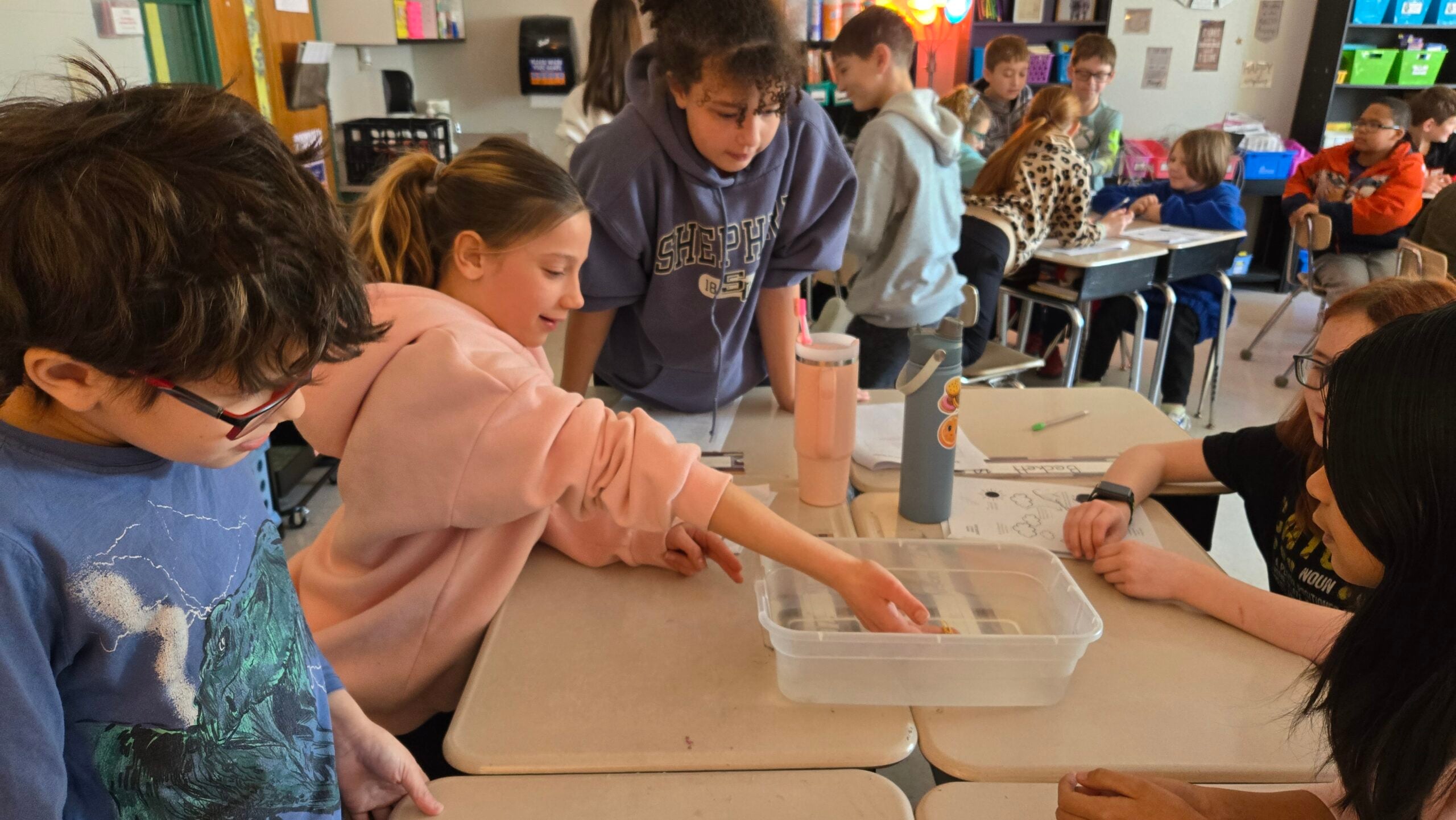 It is clear that many fourth grade teachers deeply value the program, and gush about its impact on their classrooms. Fourth grade teacher, Bryan Hott, from Mill Creek Intermediate, had the following to say about the program. “The Watershed Program is an incredible experience for our fourth graders! The hands-on activities keep students engaged and excited about learning, while teaching them the importance of protecting our environment and natural resources. The presenters are knowledgeable, patient, and wonderful with children, making complex concepts easy to understand and fun to explore.” He went on to say, “Our students especially enjoyed the interactive lessons and outdoor investigations that allowed them to connect classroom learning to the real world. The program encouraged teamwork, critical thinking, and a deeper appreciation for conservation and stewardship.This was a meaningful and memorable educational opportunity that our students will be talking about for a long time. We are so grateful for the time, effort, and passion the Watershed Program instructors put into making learning both educational and enjoyable for our fourth graders!”
Fourth grade teacher, Denise Irwin, from Tomahawk Intermediate recollects having the watershed program in her classroom for over fifteen years. “…Each year we’ve been able to provide our students with this amazing program. My students always look forward to our class time and get excited when they see the facilitator in the building. This program is a good balance of instruction and hand-on learning.” Ms. Sunday, a fourth grade teacher at South Jefferson Elementary says “The Watershed Program helps my students become more environmentally conscious and more aware of the impact their choices have on the environment. They learn that they (kids) can truly make a difference.” We are grateful to receive kind words of encouragement from fourth grade teachers all over the Eastern Panhandle, after each program season!
Of course, we are always dreaming of ways to further environmental stewardship and provide more youth education in our service area. We are quite pleased with the reach and the longevity of our successful fourth grade program, but we would love to do even more in the watershed education space one day. Kristin says it best:”One of the most amazing things is that the program has grown to reach every fourth grader (in the Eastern Panhandle). That’s always been a goal. I think the next step is doing a middle school version and a high school version of the program. That way they get that review at the middle school level and again at the high school level… If funding allowed, I would love for every high schooler to get on the Potomac River and do water quality testing… It could be some sort of incentive to stay in school. Studies show that when students have those sorts of hands-on experiences, they are more likely to come to school and more likely to graduate.”
While these middle and high school programs seem like quite the ambitious project to us now, it is important to remember how far we have come with the fourth grade Watershed Program, and how much our organization has grown since the inception of the program. With the support of the OLNI network, our program funders, teachers, and our dedicated staff, we can take baby steps until we reach this next goal one day. Here’s to another twenty more years of meaningful watershed education in our area!