PVAS offers monthly programs that are free and open to the public.
These presentations feature expert speakers on a variety of natural history and conservation topics with in-person programs. They are a great way to learn more about our natural world and meet others who love to learn too!
- Dates: PVAS Monthly Programs generally occur on the second Wednesday of each month from September to May, except December. Click here to see what programs we have scheduled.
- Time: The presentation is from 7:00- 8:00 pm, with some social time with light refreshments starting at 6:30 pm.
- Location:

 The programs are offered both in person and over Zoom, unless otherwise noted. Our in-person location is the auditorium at the Robert C. Byrd Center for Congressional History and Education at Shepherd University (213 N King St).
Where to park: Both Shepherdstown City parking and Shepherd University Campus parking are available.
- A map of city parking is here. Meters are not enforced after 6 pm. Spots along High Street are recommended.
- A map of campus parking is here. You may park in any of the Red lots. C and A are closest to the Byrd Center. Part of B lot is gated, but you may park in any spots near the Facilities building that are not behind the gate.
Do you have ideas for topics or speakers? Contact Sonja Melander, Associate Director of Education, sonja@potomacaudubon.org.
VIEW PAST PROGRAMS
If you are a Master Naturalists, these programs count towards your ongoing education hours.
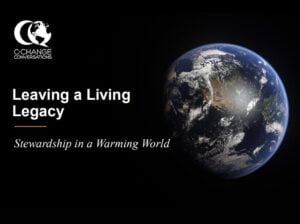
C-Change Conversations Presentation | Leaving a Living Legacy: Stewardship in a Warming World
Monday, August 3 2026
CLICK HERE FOR THE VIDEO RECORDING
CLICK HERE TO GO TO C-CHANGE CONVERSATIONS’ WEBSITE
Stronger storms, heavier rainfall, and extreme heat are increasingly affecting communities across the Potomac Valley and beyond. Yet conversations about climate change can still feel overwhelming, divisive, or disconnected from local concerns. Join C-Change presenter Peter Girard for a C-Change Conversations presentation exploring how climate change affects not only the environment, but also human health, personal security, and economic and geopolitical stability. Drawing on local and regional examples, this program will connect global climate trends to the impacts already being experienced in our communities. C-Change Conversations is a nonpartisan nonprofit dedicated to making climate discussions accessible, respectful, and productive. Using data from trusted sources and a practical, nonthreatening approach, C-Change helps audiences move beyond polarization and engage thoughtfully with both the challenges and opportunities ahead. Through its signature Climate Primer presentation, C-Change has reached more than 25,000 people across 34 states and internationally. Tailored to the interests and concerns of this community, the presentation will provide a locally relevant, fact-based perspective and practical tools for understanding and discussing climate change.
About the Presenter, Peter Girard:
Peter has spent the past 10 years working with researchers, journalists, policymakers, and organizational leaders to communicate a scientific understanding of our changing world to people who have the power to protect it. He recently led communications at Climate Central, guiding the group to become the most widely cited climate NGO across global news media, and earning the trust of politically diverse outlets as a source of reliable, unbiased information on climate science and solutions. Today, Peter helps science-focused organizations – including C-Change Conversations – present an optimistic vision of the future and show people how they can become a part of it.
Main Street: A Proven Strategy for Historic Small Towns
Wednesday, May 13 2026
CLICK HERE FOR THE VIDEO RECORDING
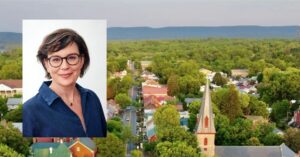
This presentation, cosponsored with the Historic Shepherdstown Speaker Series, will address the success of the Main Street movement over the past 45 years in demonstrating the effectiveness of a combination of historic preservation, including preservation of green spaces, economic development, marketing and business restructuring strategies in strengthening the competitiveness of the downtowns of historic small towns and historic urban neighborhoods. Main Street America, with a network that currently includes 1,200 towns in 44 states, continues to adapt to changing economic, demographic and retail trends and pressures facing America’s small historic towns – which Ms. Barnes will address in her talk. Main Street America is a subsidiary of the National Trust for Historic Preservation, which created the initiative in the early 1980s in response to historic small town downtowns throughout the country where historic buildings were decaying and business competitiveness was not being adequately addressed. In 2024, the network had $7.65B of local reinvestment and 10,126 building rehabs.
About the Presenter, Erin Barnes:
For 15 years, Erin was CEO of ioby, an organization she cofounded, designed to mobilize neighbors who have good ideas to become powerful civic leaders who plan, fund, and make positive change in their own neighborhoods. The Rockefeller Foundation awarded Erin and her co-founders at ioby the Jane Jacobs Medal for New Technology and Innovation. She has also been a freelance writer on climate change and other environmental issues. Earlier in her career, she was a community organizer and public information officer at the Save Our Wild Salmon Coalition in Portland, Oregon. Erin holds a B.A. in English and American Studies from the University of Virginia and a Master of Environmental Management from Yale University.
Eastern Ecological Science Center: Research and Accomplishments
Wednesday, April 8 2026
CLICK HERE FOR THE VIDEO RECORDING
Leetown, WV is home to one of three Eastern Ecological Science Center facilities. Initially the site of several grist mills, the Leetown Science Center was established in 1931 as the first federal fish & aquatic ecosystem research lab. For nearly 100 years, it has provided world-class, nonregulatory science supporting conservation of fish, wildlife, habitats and ecosystems. In her talk, Dr. Heather Walsh discussed the history and impact of this important scientific facility, up to her own present-day research and that of others!
About the Presenter, Dr. Heather Walsh:
Heather Walsh works at the Eastern Ecological Science Center as a fish biologist. Her research focus is to better understand how environmental changes affect the health of wild fish and what that could mean from a human perspective. She is also a member of PVAS and enjoys birding as a pastime.
Bringing Elk Back to West Virginia: What Genetics Can Tell Us About a Conservation Comeback
Wednesday, March 11 2026
CLICK HERE FOR THE VIDEO RECORDING
After being absent from West Virginia for more than a century, elk returned to the state in 2016 as part of an ambitious wildlife restoration effort. West Virginia’s elk herd is unique because it was founded using animals from two very different places: eastern Kentucky and Arizona. The hope is that this approach may ensure success where other reintroduction efforts have failed. However, one of the biggest threats to the introduced elk is brainworm. Using modern DNA tools, we studied the genetic makeup, family relationships, and brainworm susceptibility of elk introduced to and born in West Virginia to better understand whether these two source populations are mixing—and what that means for the herd’s future. Our findings highlight how careful monitoring—especially genetic monitoring—can improve the success of wildlife reintroductions and help ensure that elk remain a lasting part of West Virginia’s landscape.
About the Presenter, Dr. Amy Welsh:
A winding path brought me to the field of conservation genetics and I have always enjoyed the journey. I grew up in Baltimore, MD and received my B.S. degree in Zoology and Psychology from the University of Maryland-College Park (1996). I then worked at Walter Reed Army Institute of Research looking at the effects of sleep deprivation on performance (1996-1999). I received my Masters of Forensic Science degree from The George Washington University (1999) and then worked at the Armed Forces DNA Identification Laboratory (1999-2001), where I was introduced to genetics and its important applications. Ecology and zoology remained an important passion and I moved out west to pursue my Ph.D. in Ecology at UC-Davis (2006). The focus of my dissertation was the population genetics of lake sturgeon. I then moved to the shore of Lake Ontario and was an assistant professor at SUNY-Oswego (2006-2011). The journey has now brought me to wild and wonderful West Virginia, where I continue research on the genetics of fish and wildlife populations.
Farmland Raptor Program: Conserving Maryland’s Farmland Raptor
Wednesday, February 11 2026
CLICK HERE FOR THE VIDEO RECORDING
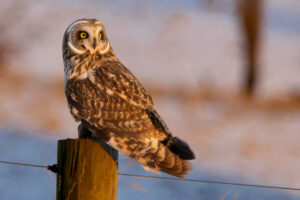
Join us for an overview of the Maryland Bird Conservation Partnership’s Farmland Raptor Program, an initiative focused on slowing and reversing the decline of raptors that provide vital ecosystem services for farmers. These species rely on Maryland’s grasslands and farmlands to nest successfully and include American Barn Owls, American Kestrels, Northern Harriers, and Short-eared Owls. Alex will cover their life history and current status in the state, share updates from ongoing research and monitoring, and highlight conservation efforts underway across the region. He will also describe ways that landowners, volunteers, and community members can get involved.
About the Presenter, Alex Pellegrini:
Alex Pellegrini is an avian ecologist based in Maryland. He earned his B.S. from Towson University in 2022, double-majoring in Conservation Biology and Animal Behavior. As the Farmland Raptor Program Coordinator with the Maryland Bird Conservation Partnership, Alex leads statewide efforts to expand nesting opportunities for American Kestrels and American Barn Owls, while also studying Short-eared Owls with a focus on taxonomy, behavior, and conservation across Maryland.
He also works as an avian research technician at Patuxent River Park, where he monitors Osprey nesting success, studies Sora migration, and leads the operation of a MAPS songbird banding station.
Beyond these roles, Alex manages datasets for Operation Osprey, serves on the Maryland/D.C. Records Committee of the Maryland Ornithological Society, and is a lead bander at the Project Owlnet station in Frederick. He is also involved in several international collaborations, including the Global Owl Project and the International Short-eared Owl Working Group, supporting research on owl taxonomy and migratory connectivity.
PVAS 2025 – A Year in Review

Wednesday, January 14 2026
CLICK HERE FOR THE VIDEO RECORDING
In this presentation we look back on everything PVAS in 2025 as we share the story of this past year!
Creating a Bird-Friendly Garden

Wednesday, November 12 2025
CLICK HERE FOR THE VIDEO RECORDING
Enjoy a feast for the eyes in this visually-rich presentation by award-winning photographer Jane Gamble. Learn about Jane’s experience welcoming birds into her garden through stunning images that celebrate the connection between wildlife and the spaces we create.
About the Presenter, Jane Gamble:
Jane Gamble is an award-winning wildlife photographer whose work has appeared in national magazines and newspapers. She is also a volunteer digital content provider for the National Park Service, and her photos are used by various federal, state, and local agencies to promote wildlife awareness and appreciation. The Audubon Society and Cornell Lab of Ornithology have recognized Jane’s work, and her photos have been featured in calendars for the Department of State, Virginia Department of Wildlife Resources, Patuxent National Wildlife Refuge, and the Chesapeake Bay Foundation. Jane is also a passionate gardener with a focus on wildlife-friendly practices. Her previous garden in Alexandria, VA was featured in the Washington Post.
Nature’s Classroom: The Legacy of Hog Island

Wednesday, October 8 2025
CLICK HERE FOR THE VIDEO RECORDING
After a recent trip to National Audubon’s Hog Island Audubon Camp on the coast of Maine, PVAS staff member, Laurel Schwartz, is eager to share all about her experience at Educator’s Week. Join us to learn about Hog Island’s rich history, the inspiring Atlantic Puffin conservation story, and the camp’s ongoing legacy of sharing nature with teachers. Hog Island has been an anchor in the lives and careers of many environmental educators through the ages. During this presentation, Laurel will share her plans to engage local students and campers in new and exciting ways and some of her most memorable takeaways from the camp week.
About the Presenter, Laurel Schwartz:
Laurel Schwartz is a PVAS Program Specialist. Since September 2021, she has managed PVAS’s 4th Grade Watershed Program. Additionally, she is the Audubon Discovery Camp Director.
Laurel is a lifelong Jefferson County resident and Shepherd University graduate. She graduated from Shepherd University with a Bachelor of Science in Environmental Studies and a concentration in Sustainable Resource Management. During the summers between the school year, she worked as a seasonal Park Ranger for both the National Park Service, at Harpers Ferry National Historical Park, and the Army Corps of Engineers, at Loyalhanna Lake Recreation Area. After graduation, Laurel served an AmeriCorps year (2019-2020) with us as an Environmental Educator. Through this role, she fell in love with youth education and nature interpretation. After her AmeriCorps year, Laurel worked for Virginia Tech as a Soil Science Research Associate and a Jefferson County Substitute Teacher.
In her free time, Laurel can be found hiking, spending time with her dogs, relaxing in a hammock, or in the kitchen trying out new recipes.
Geology, Water and Springs in the Eastern Panhandle of WV

Tuesday, September 9, 2025
CLICK HERE FOR THE VIDEO RECORDING
Have you ever wondered why the rocks aren’t flat in the region? Or why there are so many springs? The presentation will provide an overview of the geology and water resources of the region. Then we’ll talk about the karst geology of the region and why it makes it such a special place with great farmland, a multitude of springs, and an abundance of beautiful views.
About the Presenter, Dorothy Vesper:
- Do you have a property in the Eastern Panhandle or nearby vicinity with a spring that Dorothy may visit for research? Contact Dorothy at dorothy.vesper@mail.wvu.edu
- Explore more geology with the National Geologic Map Database! This website includes interactive maps.
Legislative Currents: 2025 Water Policy & Environmental Outcomes in West Virginia

Wednesday May 7, 2025
CLICK HERE FOR THE VIDEO RECORDING
Join Maria Russo, Policy Specialist at West Virginia Rivers Coalition, to discuss the impacts and outcomes on environmental protection and water policy from the 2025 West Virginia legislative session. We will discuss key bills that did and did not make it across the finish line, including those that dealt with data centers, aboveground storage tanks, and threats to drinking water protections.
About the Presenter, Maria Russo:
Forest Stewardship Management Plans: How they can support healthy forests

Thursday, April 17, 2025
CLICK HERE FOR THE VIDEO RECORDING
CLICK HERE TO READ AN ARTICLE ON THIS TALK IN THE JOURNAL
Retired WV State Forester Herb Peddicord is bringing the forest to life with an inside look at the Forest Stewardship Management Plan he recently created for the Claymont Society for Continuous Education—an educational retreat center nestled in Jefferson County. Join Herb as he takes us on a journey through the planning process, from how landowners can apply through the WV Division of Forestry to what it’s like to conduct hands-on land surveys. He’ll dive into the fascinating details of timber density, soil types, and other key data he collected on Claymont’s 180 acres of forest, revealing how it all comes together to shape management recommendations for the next 10 years. Plus, he’ll share the exciting opportunities this plan unlocks, including potential funding sources, and explore other types of management plans available to landowners.
About the Presenter, Herb Peddicord:
American Kestrels: Nest Box Monitoring and Banding
 Thursday, March 13, 2025
CLICK HERE FOR THE VIDEO RECORDING
The Grassland Birds booklets that October shared are also available online in both English and Spanish. You can also view more resources about grassland birds and habitat management available on the Virginia Grasslands Bird Initiative website here.
About the Presenter, October Greenfield:
Dark Sky Introduction: Light Pollution and What You Can Do About It
 Thursday, January 9, 2025
CLICK HERE FOR THE VIDEO RECORDING
About the Presenter, Jesse Melton:
Leveraging Satellite Imagery and Machine Learning to Identify and Monitor Threats to the Environment
 Thursday, November 14, 2024
CLICK HERE FOR THE VIDEO RECORDING
About the Presenter, Christian Thomas:
What’s A Bee City and How Do I Get One?
 Thursday, October 10, 2024
CLICK HERE FOR THE VIDEO RECORDING
- What is a Bee City? Learn about the Bee City USA program and its mission to support pollinators by enhancing habitats, increasing native plantings, providing nesting sites, and reducing pesticide use.
- Why would your town want to be a Bee City? Discover the benefits of becoming a Bee City, including ecological improvements, enhanced community engagement, and a stronger local environment.
- Who would initiate it? Find out who can lead the charge in bringing this program to your community, including local leaders, organizations, and volunteers.
- When should it start? Get insights into the optimal timing and phases for launching a Bee City initiative in your area.
- How should it begin? Learn the practical steps and strategies for starting and sustaining a successful Bee City project.
Whether you’re a community leader, environmental advocate, or simply curious about making a positive impact, this event will equip you with valuable knowledge and actionable steps to support pollinator-friendly practices in your town. Click here to see Shepherdstown Bee City USA’s Facebook page to learn more.
About the Presenter, Linda Layne:
Make the World Safer for Birds and People: fixing lights and windows
 Thursday, September 12, 2024
CLICK HERE FOR THE VIDEO RECORDING
Every year in the United States nearly one billion birds collide with lit structures and glass, mainly at low-rise buildings and homes. Light attracts migrating birds thereby increasing their risk of collisions with buildings and other structures. Fortunately, we can use easy and cost-saving solutions. By turning off unnecessary lights, closing curtains, and adding small, discrete patterns spaced 2-inches by 2-inches apart we can help birds and save money. The U.S. Fish and Wildlife Service is working with partners to reduce bird collisions at federal facilities and beyond. More and more people are taking steps to reduce collisions at their homes and businesses. Learn how you can join the growing flock and make a difference for birds and people.
About the Presenter: Dr. Joelle Gehring is a Biologist in the Division of Bird Conservation, Permits, and Regulations in the Migratory Bird Program of the U.S. Fish & Wildlife Service (2020 – present). Dr. Gehring works to reduce bird collisions with communications towers, lights, and glass. She also leads the Council for the Conservation of Migratory Birds (E.O. 13186). Prior to joining the Service she worked for the Federal Communications Commission (2012-2020) where she conducted environmental review and worked with tower operators to minimize bird collisions with communications towers and adverse effects to protected species. From 2005 to 2012, Dr. Gehring was a Senior Conservation Scientist with Michigan State University (MSU) where she designed and supervised a multi-year, landscape scale study of the variables associated with bird collisions at communications towers. While with MSU she also studied wildlife interactions with wind energy facilities and used those data to improve turbine siting. Throughout her career Dr. Gehring has used science and stakeholder input to develop and disseminate information on mainstreaming and cost-effective methods to reduce wildlife-human conflicts. Dr. Gehring completed her Ph.D. in Wildlife Ecology at Purdue University, M.S. in Wildlife and Fisheries Resources at West Virginia University, and her B.S., in both Biology and Wildlife Management at the University of Wisconsin – Stevens Point.
Monarch Butterfly Migration: Visiting the Overwintering Sites in Central Mexico
 Wednesday, May 8, 2024
CLICK HERE FOR THE VIDEO RECORDING
CLICK HERE TO LEARN MORE WITH ADDITIONAL RESOURCES SHARED BY VALERIE
Monarch butterflies are well known for their beauty and impressive life cycle that inspires those who can capture these miraculous life stages. The remarkable 3,000-mile journey from northeastern U.S. and Canada to their ancestral wintering grounds of central Mexico make this migration one of the world’s most astounding natural events. However, the monarch butterflies are declining in numbers, and we are in jeopardy of losing this phenomenon of a multigenerational migration. Habitat loss is a major factor here in the U.S. and in their central Mexico overwintering sight. Come learn about monarchs and how you can help!
This February 2024 Valerie visited the Monarch Butterly Biosphere Reserve in Central Mexico. She traveled with a small group of monarch educators and enthusiasts with Monarch Joint Venture. Natural Habitat Adventures provided the expedition leaders and expert naturalist guides, taking the group to Angangueo into El Rosario Sanctuary and Chincua Sanctuary. Traveling into these sanctuaries by horseback, they were able to witness tens of millions of monarch butterflies covering the oyamel fir trees!
Efforts to preserve this fragile forest ecosystem are the key to the monarchs’ survival. Natural Habitat Adventures partners with the World Wildlife Fund who assists local communities to protect the butterflies’ habitat. These trips help demonstrate that ecotourism can be a more viable and sustainable source of economic sustenance than logging.
Valerie recommends watching this video about the endangered migration by Natural Habitat Adventures and she is looking forward to sharing more information, pictures, and videos during this presentation!
About the Presenter, Valerie Chaney: Valerie Chaney is currently the Park Naturalist/Park Activities Coordinator at Cacapon Resort State Park in Berkley Springs, WV. She is a West Virginia native of Fort Ashby, located in Mineral County. She has been with West Virginia State Parks since 2018, managing the park’s nature center and developing activities, youth programs, guided hikes, and interpretive programs for all ages. As a park naturalist, she covers a wide range of environmental topics, but monarch butterfly conservation has taken the lead. The original mowed lawn surrounding the nature center has transformed over the years into a beautiful oasis of native plants for all pollinators and as an official monarch waystation by Monarch Watch. Working with volunteer groups, monarch conservation groups, and local community groups has made this all possible. She has received grants to design and purchase plants for the monarch way station and interpretive signs. (Blue Ridge Wild Ones, The Monarch Alliance, Eastern West Virgina Community Foundation) The monarch waystation has become an outdoor classroom for all to see varieties of milkweed, monarchs in all life stages, helping our visitors discover how they can make a difference. This year was our most successful year yet of raising monarchs and tagging them on site with visitors and with local Morgan County Schools.
Planning for Native Plants & Pollinators

Wednesday, April 10, 2024
CLICK HERE FOR THE VIDEO RECORDING
CLICK HERE TO LEARN MORE WITH ADDITIONAL RESOURCES SHARED BY LARRY
As springtime gardening season (and the native plant sale!) approaches, learn about native plants, pollinators, and how to develop a plan for a pollinator garden/meadow from Larry Stritch, the former National Botanist for the US Forest Service!
What does it mean for a plant to be “native?” Who are the pollinators in the Eastern Panhandle and in Washington County, MD? After addressing these topics, Larry will move into a discussion about what native plants do for pollinators and how to develop a plan for a native plant pollinator garden/meadow. He will share the story of how he and Penny planned, constructed, and planted the meadow and native plant garden at their home. He will also discuss what needs to be done outside the growing season for pollinators and other insects to survive and thrive in winter.
About the Presenter, Larry Stritch: I began learning about gardening from my mother and grandfather as a young child. In 1985 I graduated with a Ph.D. in botany from Southern Illinois University at Carbondale. I then went to work for the Illinois Department of Conservation in a natural heritage program. In late 1988 I went to work with the US Forest Service as the Forest Botanist on the Shawnee National Forest. Later I became the Regional Botanist, Eastern Region. The Regional Forester assigned me to be his lead on the conversion of the Joliet Army Ammunition Plant to become the Nation’s first national prairie. The Illinois Conservation Act of 1995 became Law in February 1996. The Midewin National Tallgrass Prairie was created. In 1998, I became the National Botanist for the Forest Service. There are two projects that I am extremely proud of. One is the native plant policy, FSM 2070. As of today it is still the only official native plant policy of a federal agency. Secondly was my work on pollinators including the Monarch Federal Interagency Task Force, USDA Policy Task Force and finally I was appointed by the Secretary of Agriculture to be the USDA member of President Obama’s Pollinator Health Task Force. Out of this PHTF, on May 19, 2015, President Obama issued the “National Strategy to Promote the Health of Honey Bees and Other Pollinators.” I retired from the US Forest Service in March, 2016. Penny and I enjoy gardening, our membership in PVAS and other nature activities.
Global Forests, Local Action: How what we buy (or don’t buy) can help forests around the world

Wednesday, March 13, 2024
CLICK HERE FOR THE VIDEO RECORDING
CLICK HERE TO LEARN MORE WITH ADDITIONAL RESOURCES SHARED BY LINDA
Forests are essential to life on earth – they filter the air we breathe and the water we drink; they help mitigate against climate change, they provide essential food and medicines for indigenous communities around the globe, and they provide places for us to relax and recharge. Forests also provide products made from trees that we use every day – wood, paper, food, rayon, even rubber tires! But forests are under threat, from deforestation and forest degradation. In 2022, the world lost more than 16 million acres of forest around the globe —an area bigger than West Virginia—according to the 2023 Forest Declaration Assessment. Some of that is related to illegal and unsustainable logging; a lot is related to clearing forests for agricultural commodity production like palm oil, beef, soy, rubber, cocoa and wood pulp.
How can we as consumers be part of the solution to keep forests standing and healthy in some of the world’s most valuable forests? The answer: with choices that we make every day. Come learn about how each of us can make a difference with what we buy – or don’t buy – to support sustainable forestry, and businesses that are showing leadership compared with their peers. We will also share more about the FOREST Act that was just introduced with bipartisan support in Congress late last year.
About the Presenter: Linda Walker is a forester and Potomac Valley Audubon Society member who works for World Wildlife Fund, one of the world’s largest conservation organizations. As the US Forests Team lead for corporate engagement, she works with companies to reduce their supply chain impact on forests, and to support other actions like forest restoration, protection and improved forest management to keep forests thriving around the globe. Linda previously worked for The Nature Conservancy in the US and in Indonesia, where she focused on orangutan conservation, and also for the Rainforest Alliance. She also has served on the boards of the Forest Stewardship Council and the Rolling Ridge Conservancy. In her free time, Linda can often be found in her garden planting natives and adventuring in the wilds of West Virginia with her husband Shawn and son Rowan.
Assessing & Addressing “Forever Chemicals” in West Virginia Waters
Wednesday, February 14, 2024
CLICK HERE FOR THE VIDEO RECORDING
CLICK HERE TO LEARN MORE WITH ADDITIONAL RESOURCES SHARED BY JENNA & MARIA
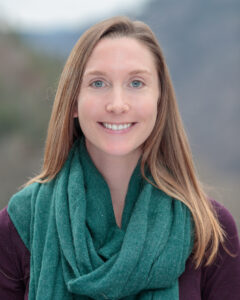
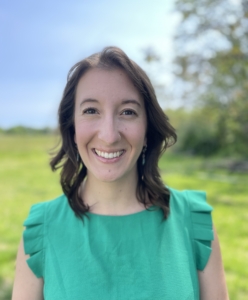
In recent years, sampling efforts have shown that West Virginia waters are contaminated with varying levels of per- and polyfluoroalkyl substances (PFAS). PFAS, also known as “forever chemicals,” do not break down in natural conditions and are toxic at very low levels, posing a serious risk to public and ecological health. Join Jenna Dodson and Maria Russo from West Virginia Rivers Coalition to hear about levels of PFAS contamination around the state, legislative solutions, and how you can get involved to protect the health of your community.
About the Presenters:
About Jenna: Jenna Dodson (she/her) is the staff scientist at West Virginia Rivers Coalition. She coordinates a variety of source water protection and policy programs, including the WV-VA Water Quality Monitoring Program. She is passionate about community engagement and science communication. After graduating from Virginia Commonwealth University with a B.S. and M.S. in Environmental Studies, she served as an agroforestry extension agent in Peace Corps Senegal. She has worked as a research assistant at Gothenburg University and West Virginia University, and previously coordinated the Georgia Adopt-A-Stream water quality monitoring program. Outside of work, she can usually be found by a river trail running, birding, biking, rock climbing or doing acroyoga.
About Maria: – Maria was raised on a small farm in Jefferson County, West Virginia, where she developed her passion for protecting the natural environment. After earning her degrees from Brown University in Public Policy and Latin American Studies, Maria worked on a variety of policy campaigns, ranging from criminal justice to environmental protection. Maria is committed to responsible policymaking and centering directly impacted people in decision-making processes, to ensure effective participation in building the future we want to see. In her downtime, you can find Maria walking barefoot, listening to live music, or floating down the river with friends.

Quantifying the threat posed by and developing sustainable solutions for invasive spotted lanternfly
 Wednesday, January 10, 2024
CLICK HERE FOR THE VIDEO RECORDING
Dr. Leskey will present the spotted lanternfly life history and invasion patterns, current research on the host plants that are at risk to injury (wine grapes) and those likely not to be impacted, how scientists monitor for their presence (traps and eDNA), and some sustainable solutions for their management (biological control, entomopathogenic fungi).
About the Presenter – Tracy Leskey holds a PhD in Entomology from the University of Massachusetts, a MS in Ecology from the Pennsylvania State University, and a BS from Wilson College. Dr. Leskey has been employed by the USDA-ARS, Appalachian Fruit Research Station in Kearneysville for over 20 years where she serves as Station Director and Research Entomologist. Her research has focused on development of behaviorally-based management tools for invasive and persistent native pests of fruit crops. She has published over 180 peer-reviewed journal articles and several patents. Dr. Leskey has been interviewed by the New York Times, Washington Post and NPR on numerous occasions and appeared live on Fox News and C-SPAN and have done several stories with National Geographic. She has served on the Governing Board of the Entomological Society of America and currently serves on the Board of Trustees at Wilson College.
 Volcanoes
Wednesday, November 8, 2023
CLICK HERE FOR THE VIDEO RECORDING
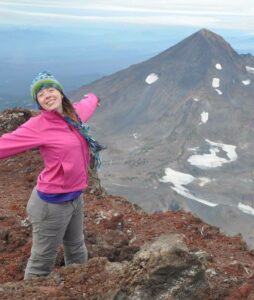
For as long as humans have lived with volcanoes, humans have had deep, multifaceted connections to these landforms that have shaped their lives in so many ways. Volcanoes can be a source of harm for the hundreds of millions of people living on or near their slopes. Yet volcanoes are also a source of good. These majestic, beautiful landforms inspire. They create rich, diverse ecosystems, near and far. They are the source of many materials used by people since time immemorial to the present day.
Come and learn about some of the many ways to think about and appreciate these awe-inspiring forces of nature! Sonja will cover topics ranging from the science of volcanoes to human connections to volcanoes. She will bring some of her personal collection of volcano art, photos, and other doodads from her time at volcanoes.
About the Presenter – Sonja joined the PVAS team in Spring 2023. Sonja began her career in environmental education during her time as a camp counselor during summers in college in western Pennsylvania. In 2008, Sonja earned her B.S. in physics and geology from the University of Pittsburgh and her M.S. in geology from the State University of New York at Buffalo. Since then, Sonja has worked in informal education at Montserrat Volcano Observatory, Craters of the Moon National Monument and Preserve, and Mount St. Helens Institute. Sonja enjoys crafting (especially crocheting), reading/learning about new topics, and spending time with her dog Pepper and other loved ones.
 Unboxing the Conservation and Management of West Virginia’s Box Turtles
Wednesday, October 11, 2023
CLICK HERE FOR THE VIDEO RECORDING
Most folks have a fond memory of seeing a box turtle. Whether it’s witnessing a box turtle stroll through their backyard, or visiting their garden, or helping one that has accidentally made its way onto a road, people often have positive, caring interactions with box turtles, and for this reason, the species serves as a phenomenal ambassador for connecting people to nature. But box turtles are in trouble—a variety of threats, from habitat loss to illegal collection have resulted in declines of box turtles across the species range, prompting biologists to take action. In West Virginia, the WVDNR has been working diligently to enhance box turtle conservation and develop new and effective conservation strategies to keep the charismatic box turtle on the landscape and continuing to promote wild and wonderful West Virginia. Come learn about box turtles, how the WVDNR are working to protect West Virginia’s box turtles, and how you can take action to help protect them.
About the Presenter – Kevin Oxenrider is the Amphibian and Reptile Program Leader with the West Virginia Division of Natural Resources. Kevin oversees conservation, management, and research actions for West Virginia’s diverse amphibians and reptiles statewide, and represents West Virginia on regional, national, and international working groups and committees to collaborate on amphibian and reptile conservation. He serves as a leading partner on the Eastern Box Turtle Working Group and has been an integral part of developing range wide conservation actions for box turtles.
 Pioneering Women in Conservation History- Herstories of the Known and Unknown
Wednesday, September 13, 2023
CLICK HERE FOR THE VIDEO RECORDING
Let’s travel back in time to visit with women in conservation history—with naturalists, scientists, adventurers, and advocates. How did a couple of cousins hosting tea parties in Boston play a role in stopping the slaughter of birds for fashion? What did a New York socialite and suffragist-turned-
About the Presenter – Maria Parisi is a Potomac Valley Master Naturalist and Potomac Valley Audubon Society member who works for the U.S. Fish and Wildlife Service’s (Service) National Conservation Training Center (NCTC) in Shepherdstown, WV. As the Partnerships Team Lead, she co-manages the History, Library, and Partnerships Branch where she also edits the Service’s Conservation History journal. After working on a journal issue with a feature essay on the history of conservation in the United States, which told the story of a few white men we credit for legislation that informs conservation today, she turned to explore women in conservation history—in and beyond the Service. In her free time, Maria can often be found in her garden planting natives and improving habitat for wildlife.
Raptors in Flight
Wednesday, May 12, 2022
Matt Orsie will lead a fascinating discussion about the identification of hawks and eagles on the wing as well as information about the timing of migration. Click HERE for the video recording.
 Recycling Trends in Our Area
Wednesday, March 9, 2022
Clint Hogbin talks about the trends in the Berkeley County recycling and litter control programs and discuss Entsorga; a mechanical and biological treatment plant located in Martinsburg, WV. Click HERE for the video recording.
 Coexisting with Beavers
Wednesday, February 9, 2022
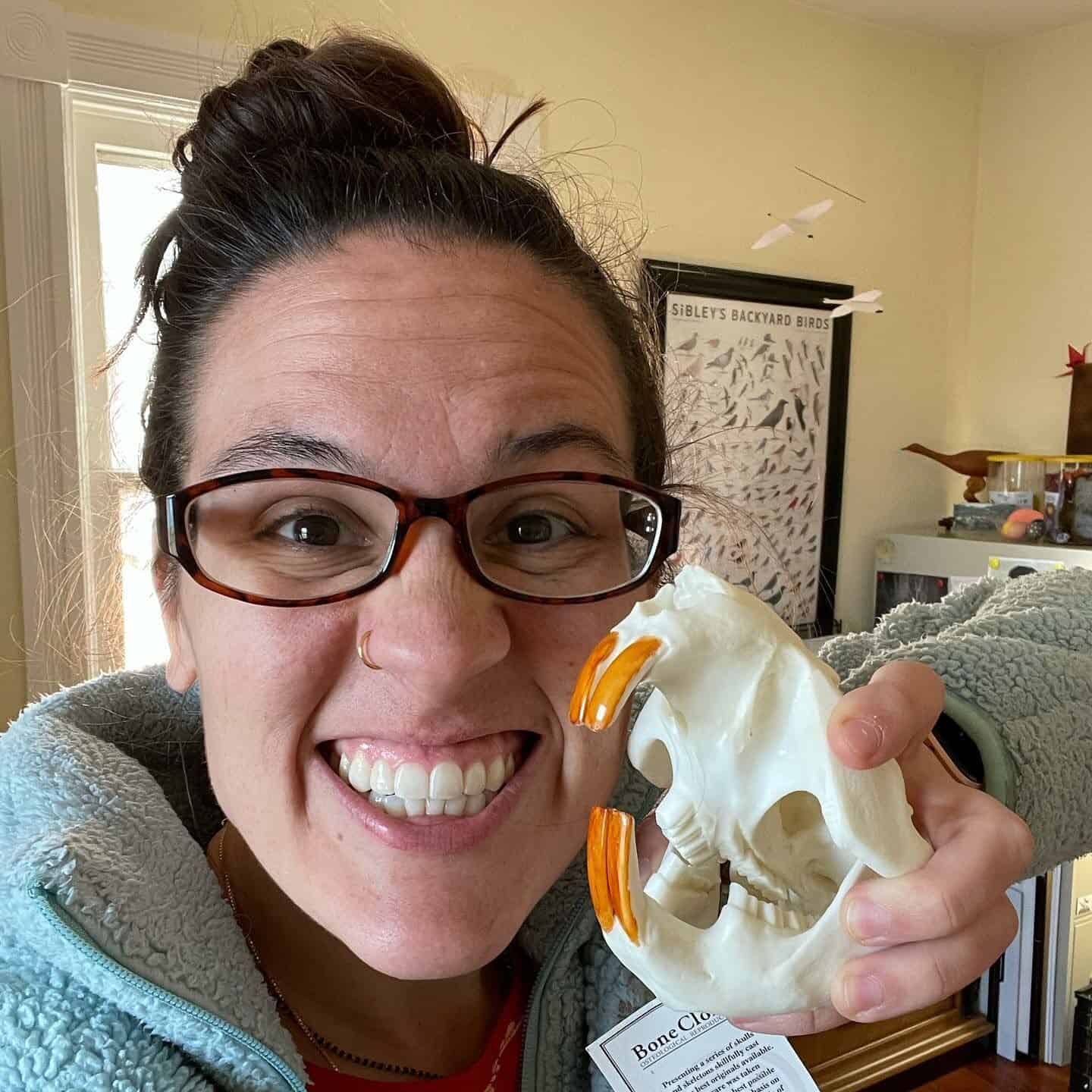
Presenter: Alison Zak, founder of the Human-Beaver Coexistence Fund (HBCF)
Alison Zak presents “Coexisting with Beavers: A Dam Worthy Challenge”. Everyone is welcome to join PVAS for our (Virtual) February Monthly Program where Alison Zak discusses a little beaver ecology and behavior, a lot about the benefits beavers provide for people/other species/the environment, and most applicably, how to coexist with beavers! Click HERE for the video recording.
2021 Programs
 Randy Robinson, USFWS, presents Bald Eagles of the Potomac Valley. Randy coordinates the NCTC Eaglecam project in partnership with the Outdoor Channel and the Friends of NCTC to support conservation education. During this presentation, he will give an in-depth look at the bald eagles of the Potomac Valley. Randy will use photos and video clips to discuss bald eagle behavior, biology, nest history and some of the technology needed to keep the eagle nest video streaming to our homes and school classrooms. Click HERE for the video recording.
 October 2021: “When Birds Collide” Feather Identification at the Smithsonian Institution
Watch Here https://youtu.be/Pk8k_jLLshQ