

by KC Walters, PVAS Conservation & Land Manager
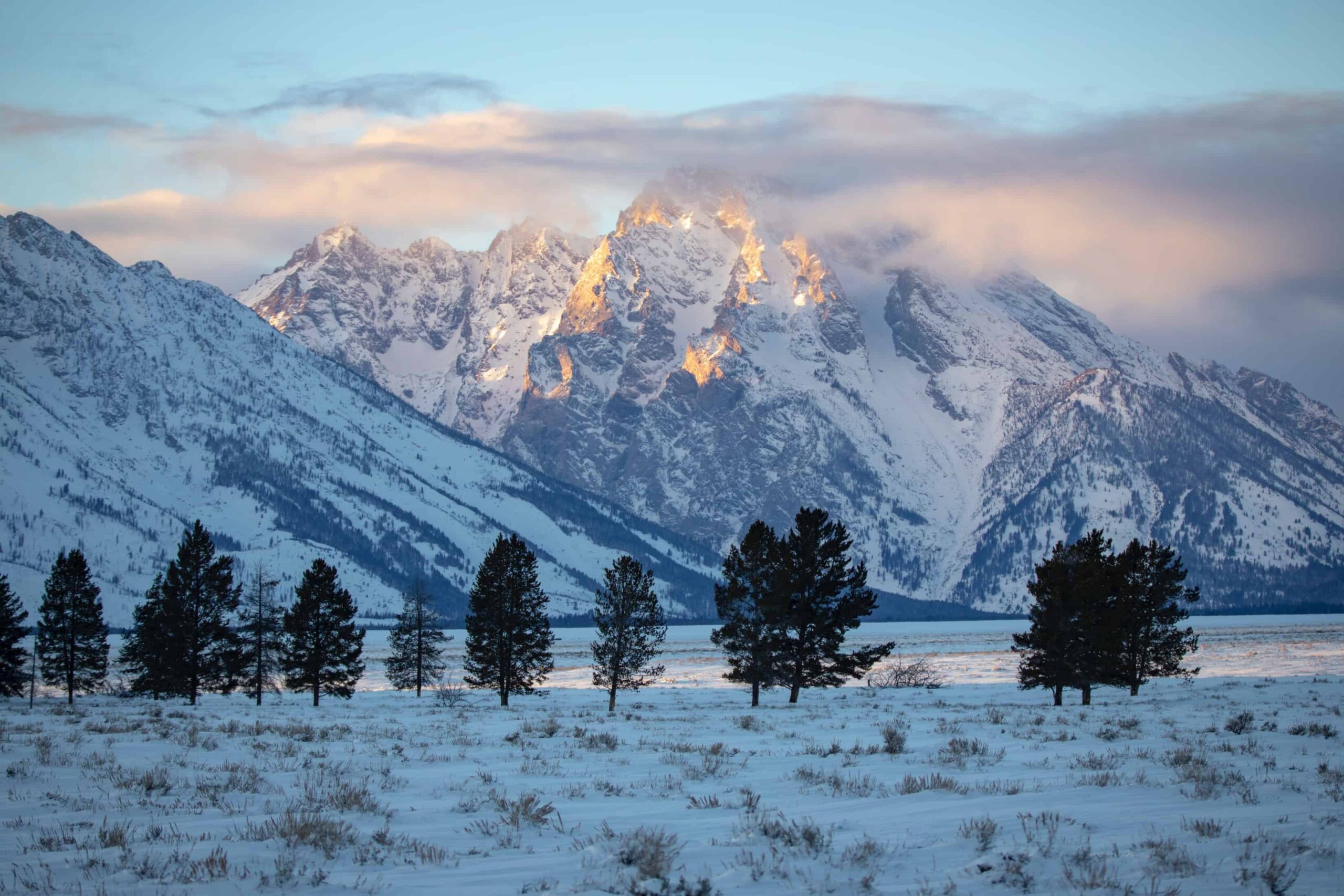
In recent years, my dad, grandmom and I have started taking a winter vacation. Last month, we flew to Wyoming, spent a few days in Yellowstone and Grand Teton National Parks and then went skiing in Jackson Hole. It was amazing! My camera was glued to my side as I scouted out bison, elk, coyote, mule deer, red fox and trumpeter swans. The highlight though was a lone wolf in Hayden Valley. Yes, it was a least a mile off, so the photos are terrible but it was in fact a wolf and I got to see it!
But, I digress; this blog post is not about my awesome vacation, but rather my efforts to not let my resolution of becoming 12 shades greener slip away in the very first month just because I was traveling. Throughout the planning, packing and traveling, I was determined to find the greenest choices I could. I feel I had several successes but I also found myself splurging and treating myself, I was on vacation after all!
Traveling automatically increased my carbon footprint for the year. Unless I was to walk/run/bike or teleport, there’s just no getting around this fact. The first choice is great if you have unlimited time to take off work, boundless energy and don’t have to cross an ocean. I’d personally be a huge fan of choice two, but alas, teleportation is still a pipe dream. While alternative energy sources are becoming more common, the vast majority of planes, trains and automobiles burn fossil fuels and emit greenhouse gases.
Air travel obviously comes with the largest carbon footprint. But, I did a little research into flying green and found you can still make choices to rein in your impact without giving up your vacation. For example, flying economy class. It’s not only the most economical choice; it’s also the most ecological. Sure, everybody wants the extra legroom and comforts of first class, but first class air travelers are actually responsible for more of the jet fuel usage because they are taking up more space on the aircraft. Also, choosing a direct flight if you can. Most of the jet fuel used is consumed during take off. So, if you have to hop more than one plane, you’re increasing your carbon footprint. If you do have to have a layover and change planes, choose a layover location that is in as straight of a line as you can between you and your destination. Finally, some airlines are now offering you the option to purchase a carbon offset with you ticket. While, buying a carbon offset won’t stop global warming, at least it helps to neutralize the impact when you travel.
For the trip out, there were no direct flights from Dulles to Jackson Hole, so we chose to have a layover in Denver. Not a perfectly a straight line, but pretty close. My dad and I both managed to pack all of our gear in a carry-on bag and a backpack. It can be assumed that if you pack less, the plane will be lighter and therefore not need as much fuel to fly. Might be a stretch, but I still always try to pack light to not only help my carbon footprint but also my wallet! I was unable to be as efficient as my dad however, who managed to only pack two pair of underwear for a seven-day trip (eww!).
When packing, I avoided purchasing the single-use travel-sized products. While convenient, they are very wasteful. Instead, I purchased a set of tiny bottles that I can continue to refill for each trip. I also made sure to pack a refillable water bottle. My water bottle took up so much space, but having it meant I wouldn’t have to purchase bottles of water for the entire trip. I personally drink a LOT of water, so having a refillable bottle was a MUST.
The flight was only the beginning of our transportation needs for this vacation. However, one good thing about traveling in Yellowstone during the winter is actually the limited options of transportation. It sounds strange, but the limited options made us more fuel-efficient. Due to the nearly 4-foot of snow pack, the only way to reach our lodging and explore the park was by snow coach (see photo below). Essentially, it forced us onto public transit rather than renting a car. The only other mode of transport there in winter is snowmobile. Can you say “burr”?
The National Park Service is making serious efforts to encourage visitors to be more eco-friendly. Upon arrival at our lodging, we were given the option to ‘go green’ by declining room service. They even incentivized this option with a discount on the room fees. This was an easy choice for me even without the discount. For a long time, I have wondered why someone needs fresh towels every day. I’m using the towel when I’m clean, so how does it get dirty? I found the towel was perfectly fine to hang up to dry to use it again the next day and the next day and the next day.
One very interesting initiative the park was participating in was the switch to canned water. They did not even sell bottled water within the park. Even though I was set with my refillable water bottle, I still had to dive deeper into this canned water thing. The idea behind cans over plastic bottles is aluminum is much more efficient to recycle. It consumes less energy to recycle, and cans can be recycled into new cans, thus closing the recycling loop. On the other hand, bottles are down-cycled and rarely become bottles again.
Eating while traveling presents another challenge in remaining eco-conscious. It’s so much fun to try new foods and new restaurants and splurge on dessert. It’s no secret American portion sizes are out of control. Whenever I eat out, I always end up with leftovers. But when you travel what do you do with leftovers? So much wasted food! For this trip I made every effort to order a smaller portion and not let my eyes be bigger than my stomach. There was only one meal I could not finish, and that was primarily because it was entirely too spicy.
I’ll admit I didn’t make every green choice I could have during the trip. Our condo in Jackson Hole had a huge Jacuzzi tub I just had to try out at least once. And while I was wearing lots of layers while outside, I was more than happy to shed those layers and turn the heat up a little more than necessary in our accommodations.
My whole green resolution nearly went up in a puff of CO2 with our return flight. Our original plan was to have a brief stop in Chicago before taking us back to Dulles. However, snow in Chicago caused us to be re-booked on a flight going to San Francisco to connect with a flight back to Dulles. I couldn’t believe that our best option was to fly 1,000 miles in the wrong direction. It hurt my heart, but there was hardly an alternate choice I could make at that point. Fortunately, the airline made a last minute decision to make an extra flight to Denver. Whew!
So, this month I’ve concluded vacations are not eco-friendly. But I still feel traveling is a very important part of life. Travel opens your eyes to all the corners of this beautiful planet and teaches you to embrace it. I will continue to travel but I will also continue to choose the green(er) paths along the way. Every little bit helps.