• About
    • About Us
    • Our Team
    • Board Members
    • Current Team Openings
    • Annual Report
    • Governance
    • Finances
    • Valley Views Newsletter
    • PVAS in the News
  • Calendar
    • All Events
    • Birding
    • Classes & Workshops
    • Guided Walks & Experiences
      • Bird Walks
      • Full Moon Walks
      • Nature Journaling
      • Wellness Walks
      • Additional Walks & Experiences
    • Nature Center Open Days
    • Talks & Presentations
    • Volunteer Opportunities
    • Youth Programs
      • Discovery Camp
      • Nature in the Neighborhood
      • StoryWalk®
      • Forest Storytime
      • Turtle Time
    • Special Events
  • Education
    • Adults
      • Classes & Workshops
      • Guided Walks & Experiences
      • Master Naturalists
      • Monthly Programs
    • Youth Programs
      • Discovery Camp
      • Forest Storytime
      • Turtle Time
    • Schools & Educators
      • School Programs
      • StoryWalks®
      • WV OLNI
      • Library Backpacks
      • Activities
  • Conservation
    • Initiatives
      • Chimney Swift Conservation
      • The Monarch Alliance
      • Weed Warriors
      • Plant This, Not That
    • Habitat Stewardship
      • Grassland Birds Initiative
      • Protected Pollinator Patch
      • Wildlife Habitat
    • Advocacy
      • PVAS and Advocacy
      • State & Federal Contacts
    • Nature Preserves
      • Cool Spring Preserve
      • Yankauer Nature Preserve
      • Eidolon Nature Preserve
      • Stauffer’s Marsh Nature Preserve
  • Birding
    • Bird Walks & Classes
    • Birding 101
    • Birdathon
    • Birding Community Science
    • Birding Resources
    • Birding Trails
  • Affiliate Programs
    • National Audubon Society
    • Master Naturalists
    • The Monarch Alliance
  • Support
    • Donate
    • PVAS Membership
    • Fundraisers
    • Ways to Give
    • National Audubon Membership
    • Volunteer
    • Share Your Photos
  • Other
    • Current Team Openings
    • Wildlife Hotline
    • Race for the Birds
  • Become a Member
  • e-Newsletter
  • Donate Now!
Potomac Valley Audubon SocietyPotomac Valley Audubon Society
  • Become a Member
  • Wildlife Hotline
  • e-Newsletter
  • Donate Now!
  • About
    • About Us
    • Our Team
    • Board Members
    • Current Team Openings
    • Annual Report
    • Governance
    • Finances
    • Valley Views Newsletter
    • PVAS In The News
  • Calendar
    • All Events
    • Birding
    • Classes & Workshops
    • Guided Walks & Experiences
      • Bird Walks
      • Full Moon Walks
      • Nature Journaling
      • Wellness Walks
      • Additional Walks & Experiences
    • Nature Center Open Days
    • Talks & Presentations
    • Volunteer Opportunities
    • Youth Programs
      • Discovery Camp
      • Nature in the Neighborhood
      • Forest Storytime
      • Turtle Time
      • StoryWalk®
    • Special Events
  • Education
    • Adults
      • Bird Walks
      • Monthly Programs
      • Master Naturalists
      • Workshops
    • Youth Programs
      • Discovery Camp
      • Forest Storytime
      • Turtle Time
      • Activities At Home
    • All Ages
      • Community Science
      • Animal Ambassadors
    • Schools & Educators
      • School Programs
      • Opportunities for Homeschoolers
      • WV OLNI
      • Educator Resources
      • StoryWalks®
      • Library Backpacks
  • Conservation
    • Initiatives
      • Chimney Swift Conservation
      • The Monarch Alliance
      • Weed Warriors
      • Plant This, Not That
    • Habitat Stewardship
      • Grassland Birds Initiative
      • Protected Pollinator Patch
      • Wildlife Habitat
    • Advocacy
      • PVAS and Advocacy
      • State + Federal Contacts
    • Nature Preserves
      • Cool Spring Preserve
      • Yankauer Nature Preserve
      • Eidolon Nature Preserve
      • Stauffer’s Marsh Nature Preserve
  • Birding
    • Bird Walks
    • Birding 101
    • Birdathon
    • Birding Community Science
    • Birding Resources
    • Birding Trails
  • Affiliate Programs
    • National Audubon Society
    • Master Naturalists
    • The Monarch Alliance
  • Support
    • Donate
    • PVAS Membership
    • Fundraisers
    • Ways to Give
    • National Audubon Membership
    • Volunteer
    • Share Your Photos

News

Home NewsManaging Spotted Lanternfly Populations

Managing Spotted Lanternfly Populations

1:11 pm News

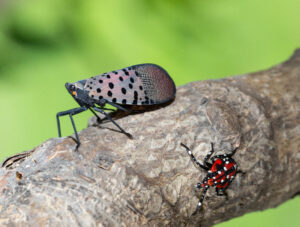
SLF-spotted lanternfly (Lycorma delicatula) winged adult 4th instar nymph (red body) in Pennsylvania, on July 20, 2018. USDA-ARS Photo by Stephen Ausmus.

Eliminating the Spotted Lanternfly from our area may be an impossible feat at this point. However, any efforts to reduce the population of this pesky invasive bug are still worthwhile. Essentially, we are buying time for our native flora and fauna to adapt to the Spotted Lanternfly presence without being decimated from our landscape. Over time, it is projected that birds and other insect-loving native critters will learn to consume Spotted Lanternflies as a regular food source.

So, here at PVAS, we are doing our best to continue the fight against Spotted Lanternfly. We recently had two volunteer workdays led by USDA-APHIS Pest Manager Dana Burton. She taught our awesome volunteers the tools of her trade to kill Spotted Lanternflies, particularly those that have yet to hatch. Nymph and adult Spotted Lanternflies are incredible jumpers and very hard to catch. On the other hand, an egg mass is completely sedentary and can contain 40-50 future Lanterflies.
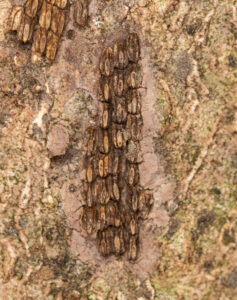
SLF-spotted lanternfly (Lycorma delicatula) Egg mass in Pennsylvania, on July 16, 2018. USDA-ARS Photo by Stephen Ausmus.
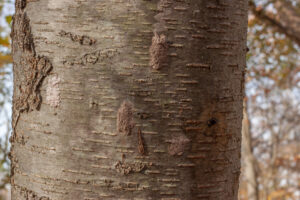
Photo of SLF egg mass by Luke Hearon

There are at least two ecologically friendly methods to eliminate egg masses: scrape them off or spray them with soybean oil. The scrape method results in immediate satisfaction; however, the eggs can pop out, land on the ground, and still hatch. The spray method smoothers all of the eggs within a mass, preventing them from hatching. The trickiest part is learning to spot the egg masses. Eggs are laid on trees (and other wooden objects) and then covered with a grey mud that blends in really well with bark. Although adult Spotted Lanternfly primarily feed on Tree of Heaven, it appears they most frequently lay their eggs on other neighboring trees with rough bark. They also prefer laying on the underside of branches where the eggs are most protected. Armed with soybean oil, our volunteers took to the trails at Cool Spring and Yankauer and killed thousands of Spotted Lanternflies in just a few hours.

Check in your woodlands and or on walks in nature and see if you can spot these egg masses this spring.


*We originally wrote that researchers have found that 90% of these egg masses are laid within the first 12 feet of the tree, meaning that the average person with a sprayer capable of spraying up to 5 feet can get most of the egg masses. Unfortunately, we misunderstood the research, and egg masses can actually be found along the entire length of the tree.
You also might be interested in

Youth Photography Workshop: “Capturing Winter”

Youth Photography Workshop: “Capturing Winter”

Jan 19, 2021

Eight creative homeschool students, ages 8-13, participated in this January’s[...]

PVAS Lead Teacher Featured In Two Media Outlets

PVAS Lead Teacher Featured In Two Media Outlets

Apr 30, 2020

Our Lead Teacher, Naturalist, & Audubon Discovery Camp Director –[...]

Youth Photography Programs: “Capturing Spring” March 19th & 29th
William G, Age 12

Youth Photography Programs: “Capturing Spring” March 19th & 29th

Mar 24, 2021

On March 19th and 29th, homeschool students joined PVAS staff[...]

Recent Posts

  • Where are the Birds?
  • KC Walters Accepts Award at The National Audubon Society Conference
  • Tax Benefits of Donations
  • 2024 Over the Mountain Studio Tour
  • Thank You AmeriCorps Service Members!

Categories

  • Master Naturalist
  • Monarch Alliance
  • News

Get In Touch

Potomac Valley Audubon Society
P.O. Box 578
Shepherdstown, WV 25443
(681) 252-1387
Info@PotomacAudubon.org

Connect with Us | Join Us | Support Us | EIN #: 55-0626891 

© 2026 · Potomac Valley Audubon—Website powered by The Downstream Project

Prev Next